Shaping eco-friendly futures through smart, human-centred solutions
Marks & Spencer Case Study
Team Project
Team
Bill Lin
Charis Ng
Ikmal Azman
YEAR
2024
CONTEXT
Under the university theme Ecological Citizens: Reuse, Repair and Regenerate, our team chose to explore sustainability through intelligent food packaging. We designed a concept for supermarket food packaging that allows shoppers to tap their phone on a product to instantly see key information such as freshness status, expiry guidance and sustainability impact. By making this information clearer and easier to access at the shelf, the concept aims to help people make more informed choices and reduce food waste at home. My role focused on primary research and UX/UI design, where I drew on a year of part-time experience at Marks & Spencer to bring practical retail insight into the project’s direction and concept development.
01 DISCOVER
Defining the opportunity space
BACKGROUND
Food waste isn’t just waste - it’s emissions.
When food is wasted, the emissions aren’t just from throwing it away, they include everything it took to produce, move, sell and dispose of it. In the UK, wasted food and drink generates emissions equivalent to around 16 million tonnes of CO₂, with meat & fish and homemade/pre-prepared meals among the highest-emitting categories.
How much food is being wasted at home?
of food was wasted in 2022 (about 19% at consumer level)
of food and drink was wasted in UK households in 2022
PROBLEM SPACE
A large share of household food waste comes down to timing, perception and portioning.
40%
of edible household food waste happens because food isn't used in time, often due to uncertainty about date labels or whether it looks/smells "off".
25%
of household food waste comes from cooking, preparing or serving too much.
22%
of household food waste happens when people perceive food as inedible or personally prefer not to eat it.
OPPORTUNITY
If people want to waste less, what needs to change beyond the home?
Household food waste is shaped by the wider system - what retailers sell, how products are packaged and labelled and what information people get at the point of purchase. Prevention works best when policy, production and public engagement align to help people waste less in the first place.
The shelf moment is where sustainable choices often break down.
People want to understand what they’re buying: freshness, ingredients, sourcing and impact, but labels can be hard to scan when you’re busy in-store. That uncertainty makes sustainable choices harder and can contribute to avoidable waste once food is forgotten at home. That’s why we focused on the shelf moment, exploring how smart packaging could make the right information accessible at the exact time it matters, so better decisions can prevent waste downstream.
Why M&S?
We used Marks & Spencer as the case study because customers already associate the brand’s food with quality and trust. M&S also has a strong sustainability narrative, which makes a smart-label transparency concept feel believable and more likely to be adopted within an existing retail ecosystem.
Our Goal: Make the "right info" accessible instantly, then support action after purchase.
We designed a concept combining NFC tap-to-access product information with freshness indicators to support better in-store decisions and reduce food waste. The indicator provides instant clarity at the shelf, while the app supports follow-through with storage guidance and expiry tracking. Our concept aims to create an experience that helps shoppers judge freshness quickly, verify sustainability information easily and reduce waste after purchase with practical tracking and reminders.
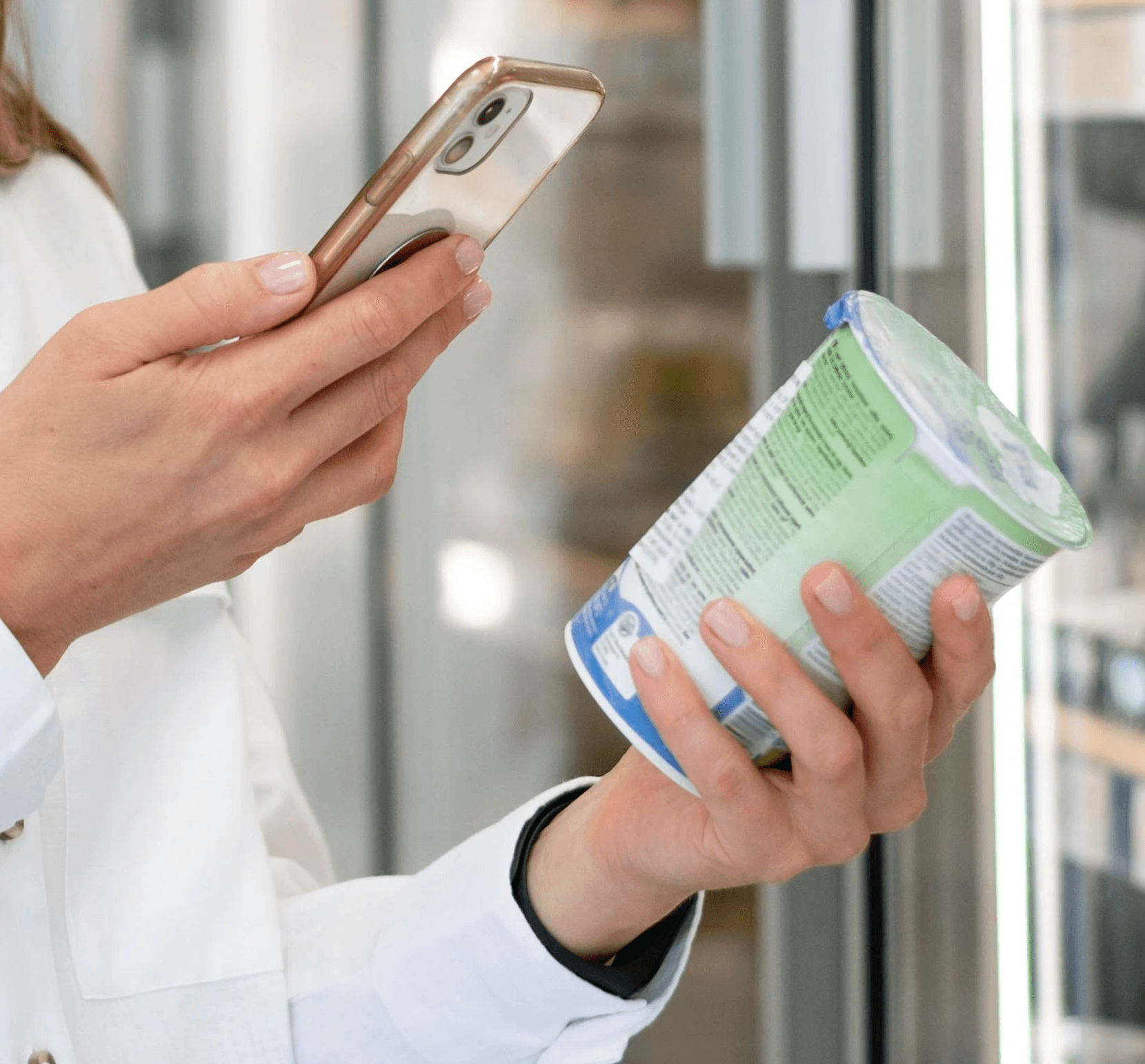
NFC (Near Field Communication) technology is short-range tap-to-connect technology, similar to contactless payment. Tapping the product label opens the digital product page instantly, with a web fallback so users can still access information without downloading the app on their phone.
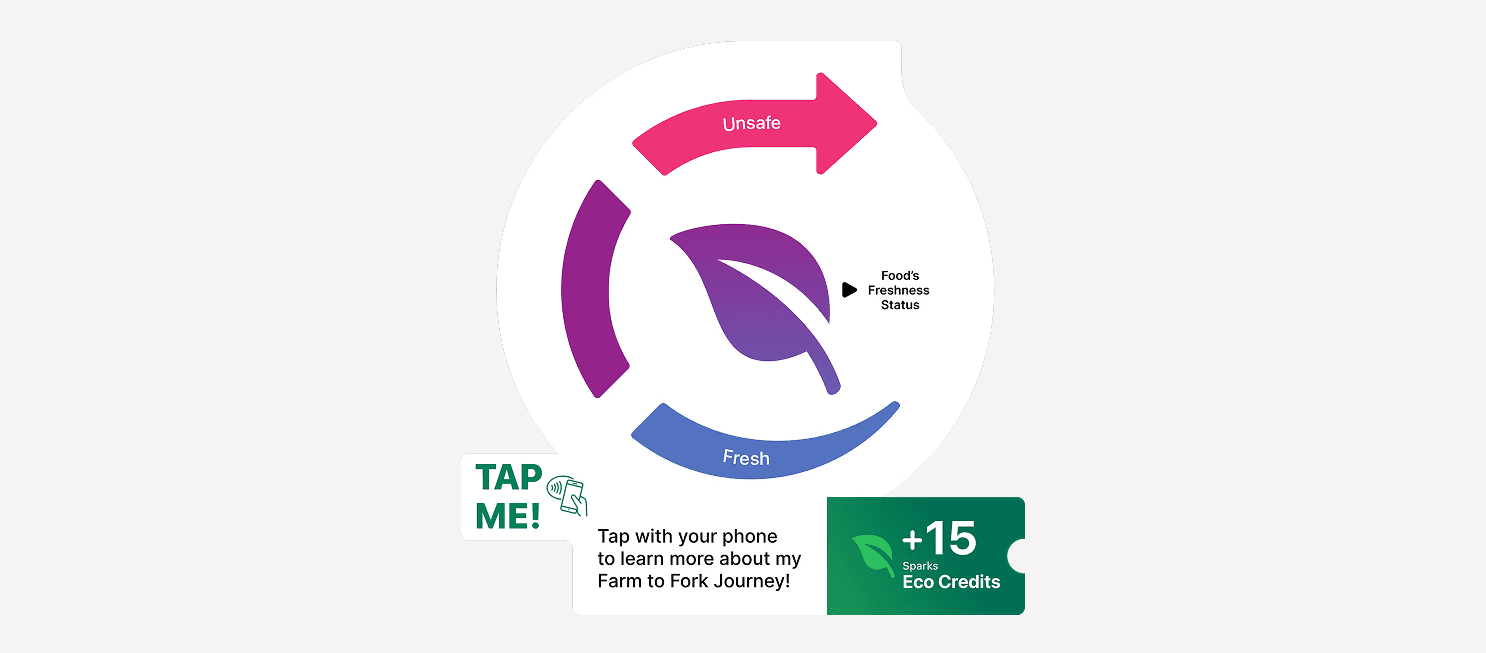
Freshness indicators are packaging signals that communicate how fresh a product is as it ages. Instead of relying only on a printed date, they can signal whether food is still within its best quality window or should be consumed soon so people are less likely to discard food early out of uncertainty.
02 RESEARCH
Grounding decisions in evidence
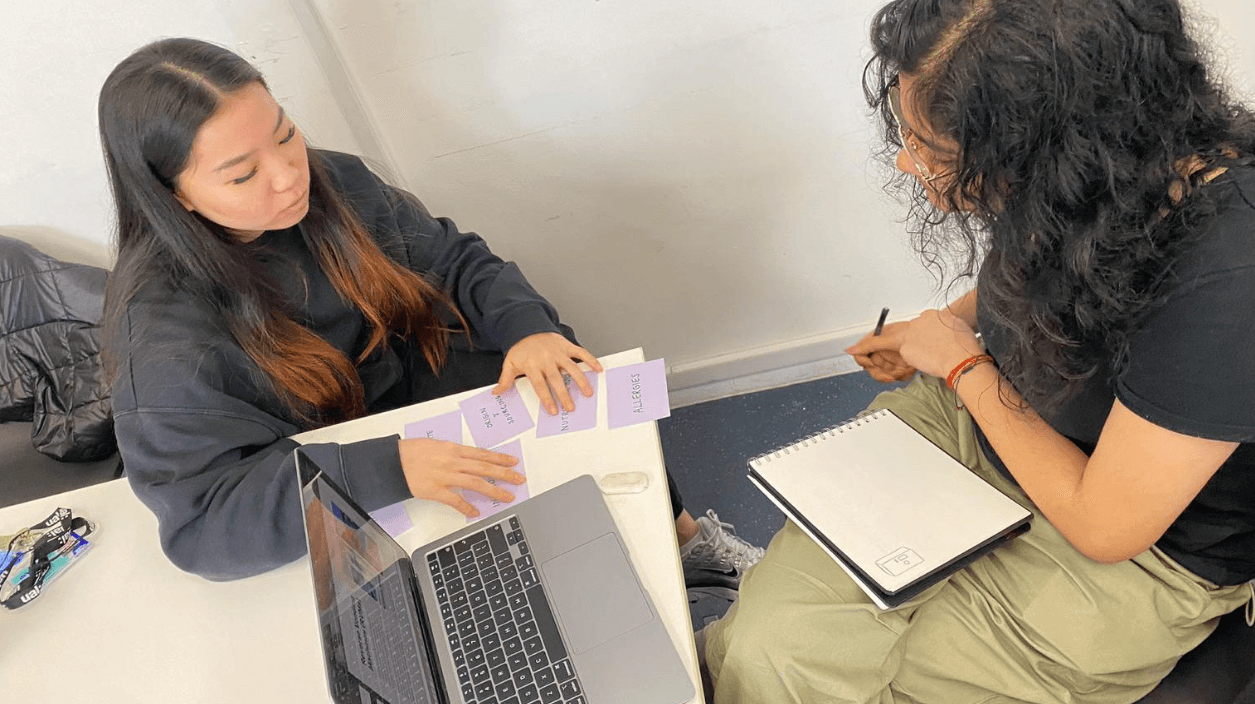
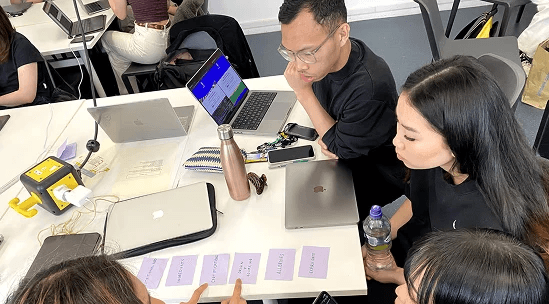
CARD-SORTING STUDY
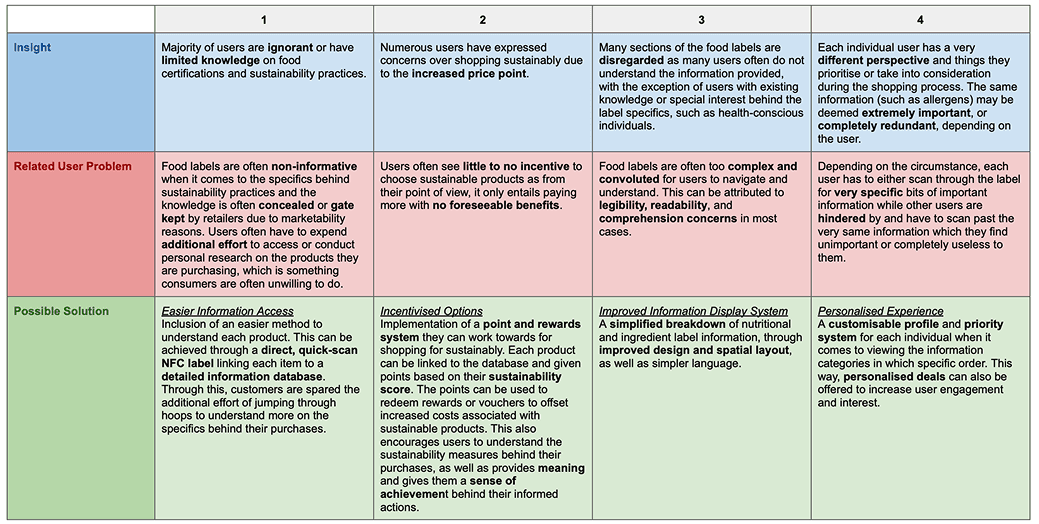
We ran card sorting to understand what shoppers prioritise when reading food information. This shaped the content order on the product page and supported the idea of personalisable information hierarchy.
Participants: 18
Format: moderated tasks & think aloud
Focus: clarity, navigation, emotional safety
MARKET SPECIALISTS INTERVIEWS
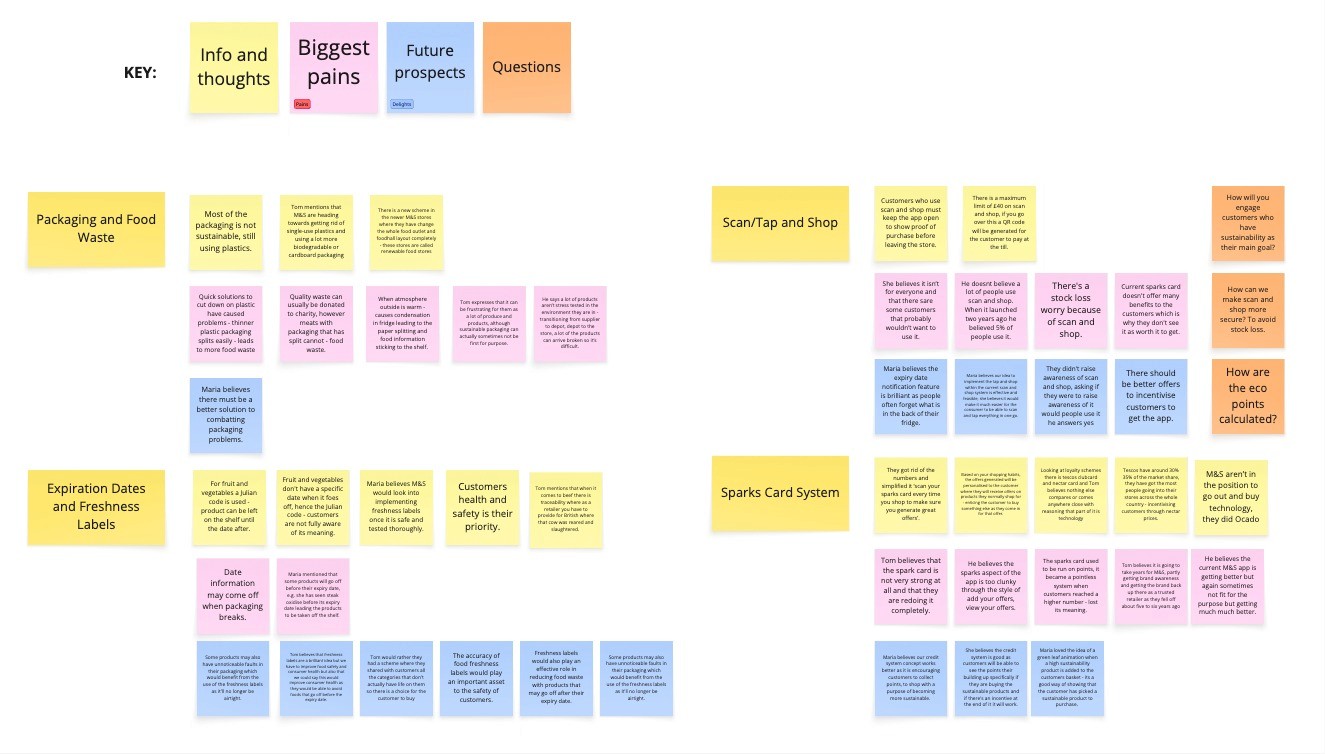
To validate feasibility beyond concept level, I conducted three semi-structured interviews with M&S store leaders across operations and food. The discussions focused on in-store behaviour, technology adoption, stock management and sustainability communication.
Format: semi-structured interviews (45 min)
I synthesised findings into a research wall to identify patterns, tensions and recurring friction points that guided what we prioritised in the final design.
INDUSTRY INSIGHTS
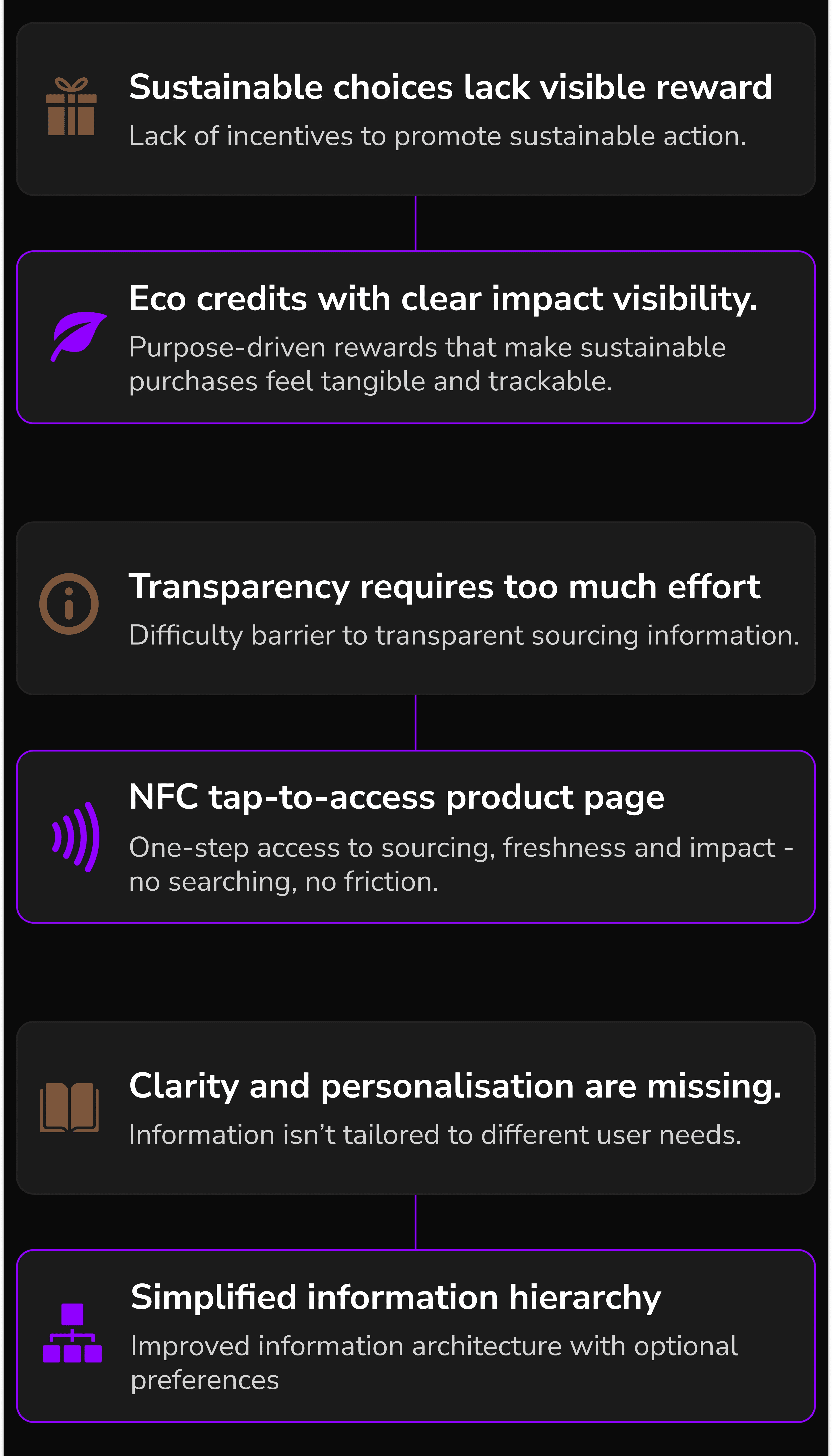
From the research wall, we uncovered systemic gaps in how sustainability and freshness are communicated at shelf level.
While sustainability efforts are happening behind the scenes, customers often can't clearly see the impact of benefit of choosing the more sustainable option.
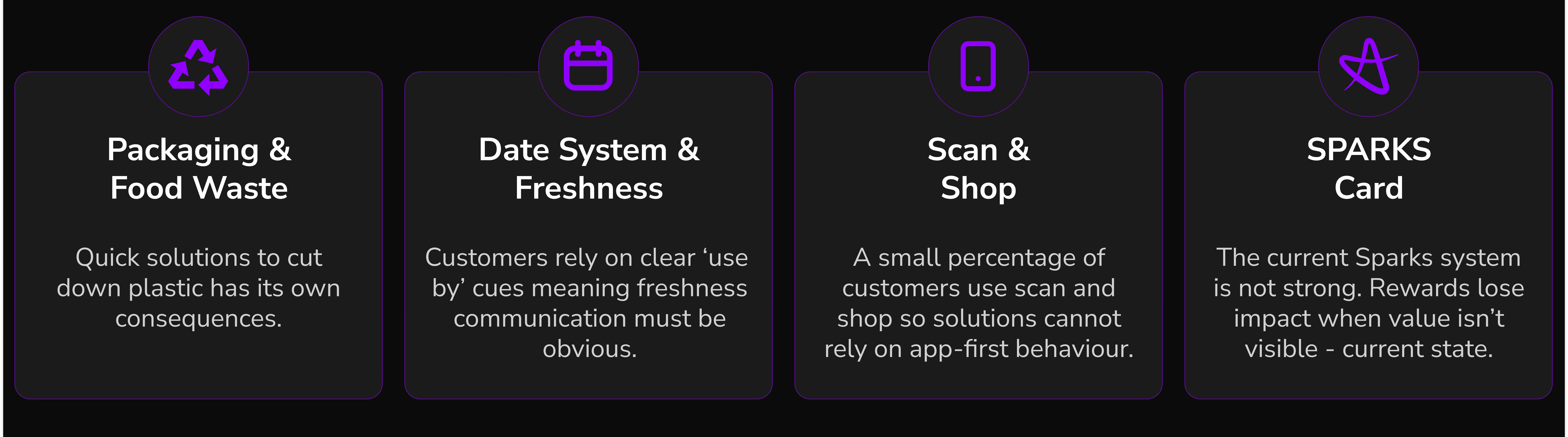
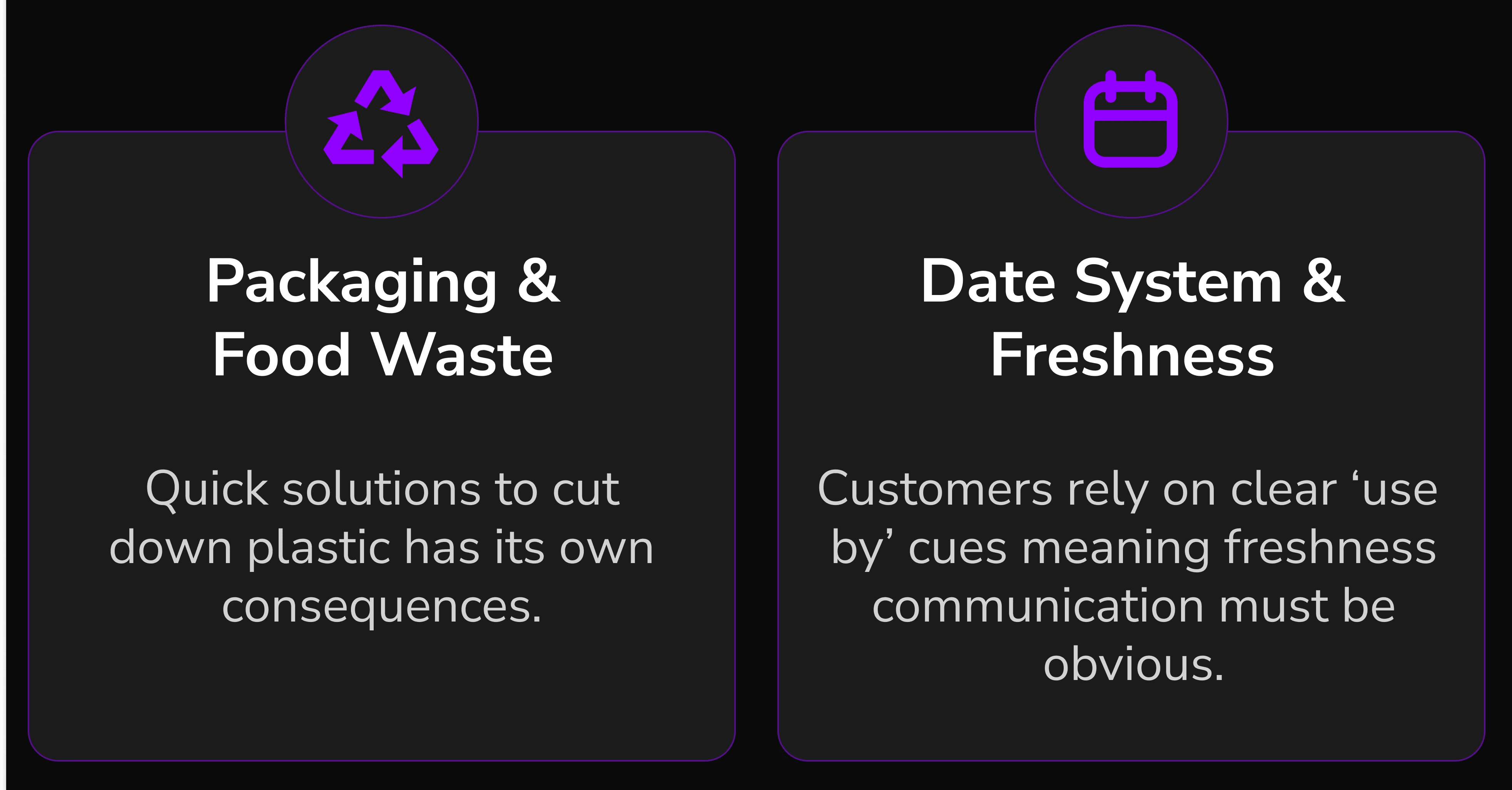
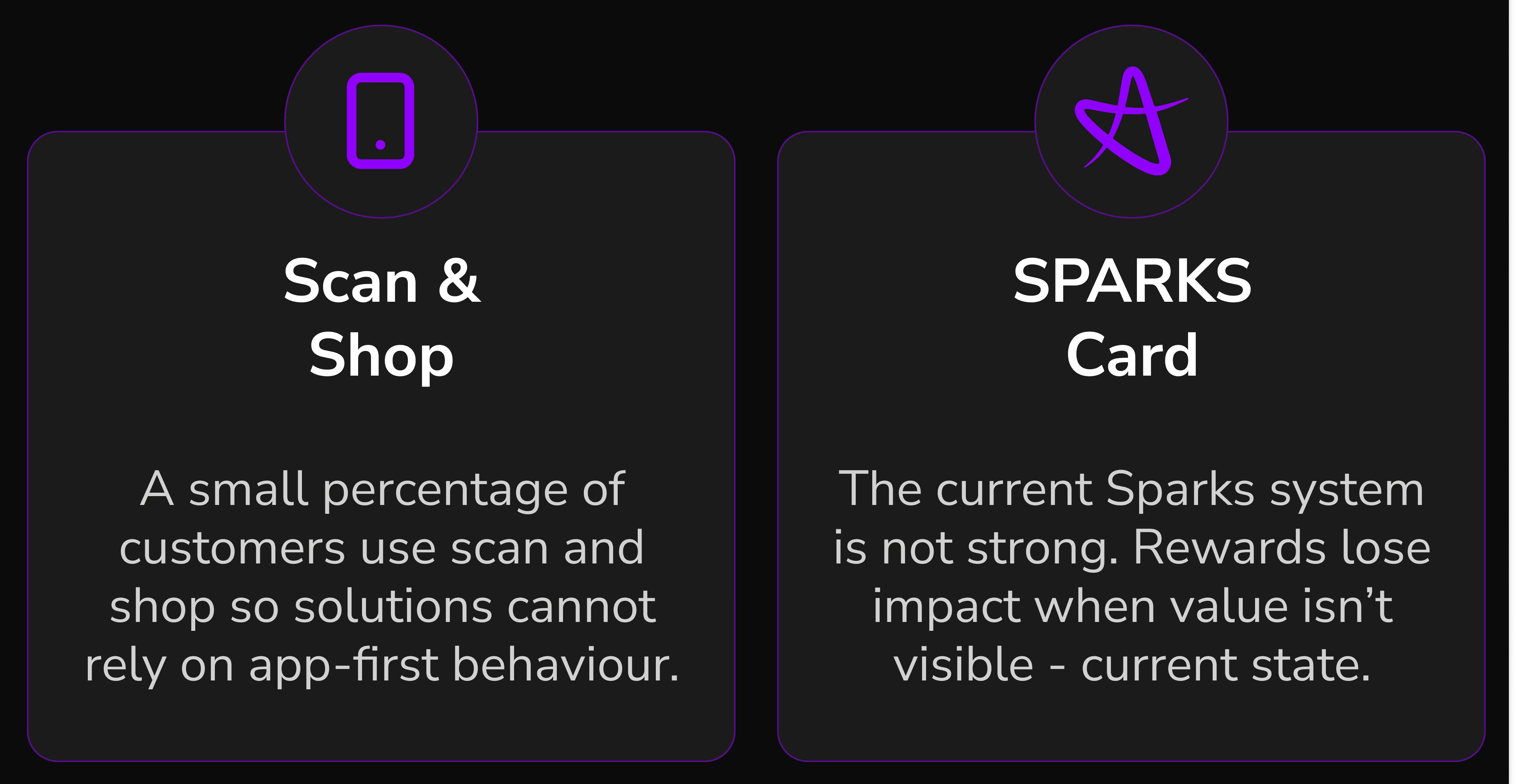
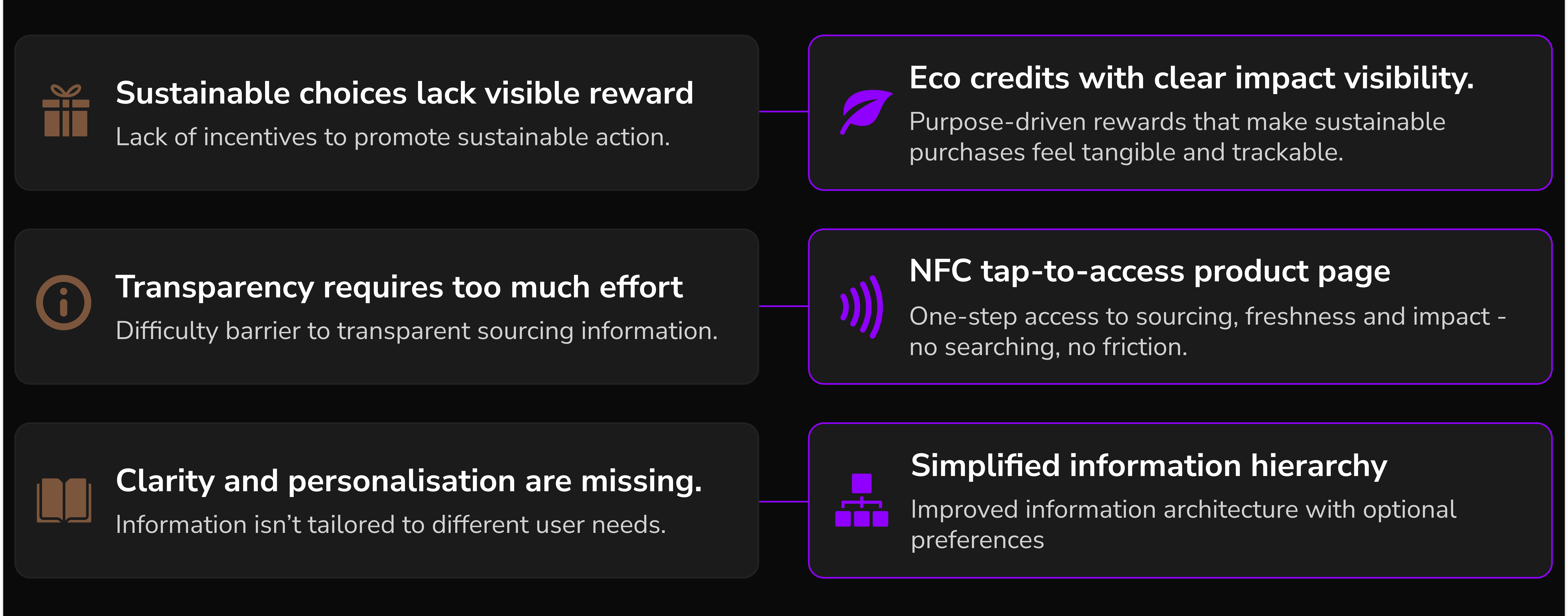
We analysed these insights by mapping behavioural friction into product intervention.
03 EMPATHISE
Understanding the users

USER PERSONA & JOURNEY MAP
We created a user persona and journey map to understand how sustainability fits into everyday shopping behaviour.
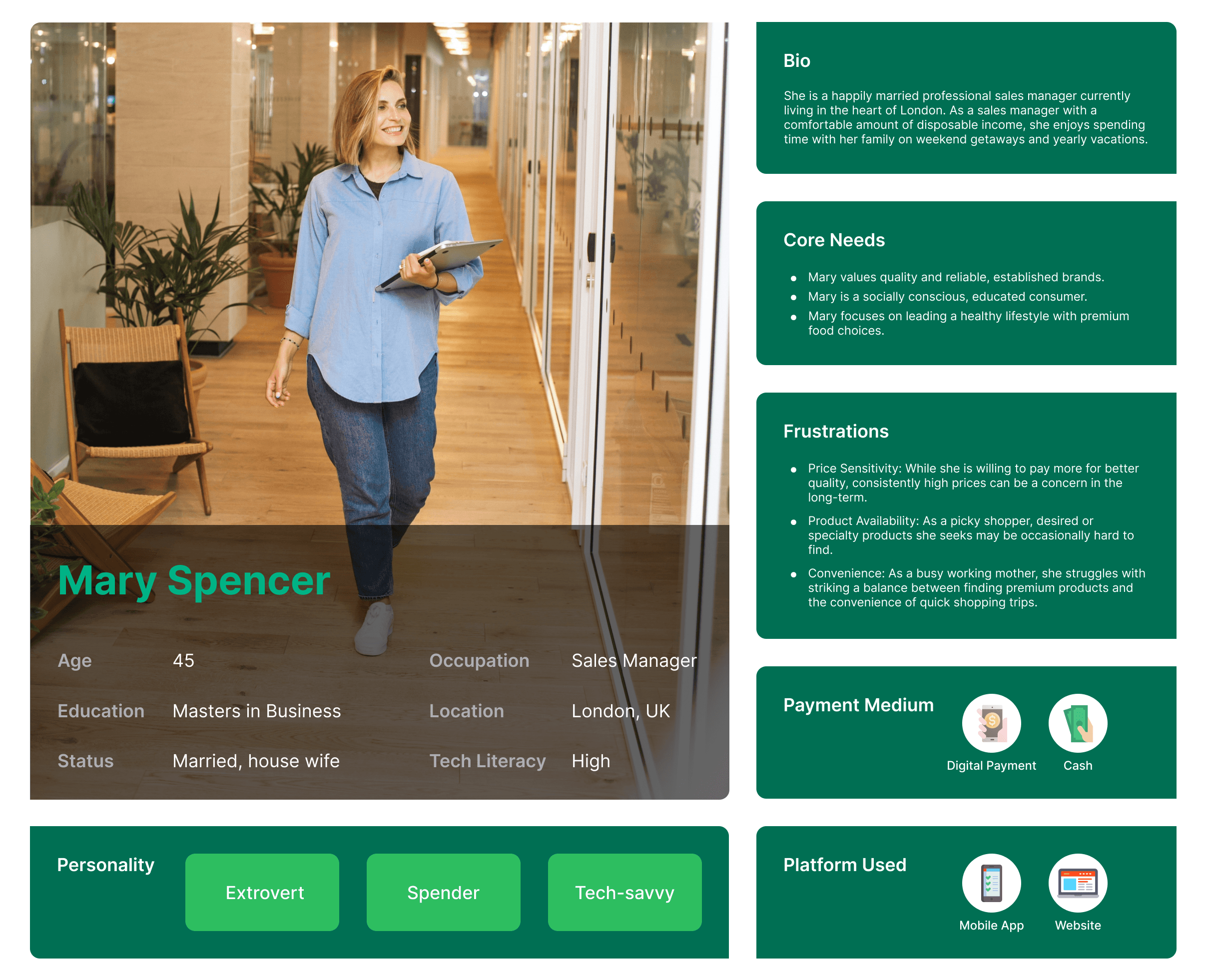
Rather than assuming intent equals action, the journey revealed where motivation drops - especially when transparency feels complex or when incentives lack clarity.
04 IDEATE
Making sustainability feel easier
CONSTRAINTS & DESIGN PRINCIPLES
We designed with real retail behaviour in mind:
Scanning should be optional.
Users should still understand freshness without needing an app.
Information must be scannable in seconds.
The product page needs clear hierarchy and low cognitive load for in-store use.
Accessibility and inclusitivty matter.
A web fallback ensures access for users who don't want or can't download the app.
The concept should fit the M&S ecosystem.
Patterns needed to feel familiar and believable within the M&S shopping journey.
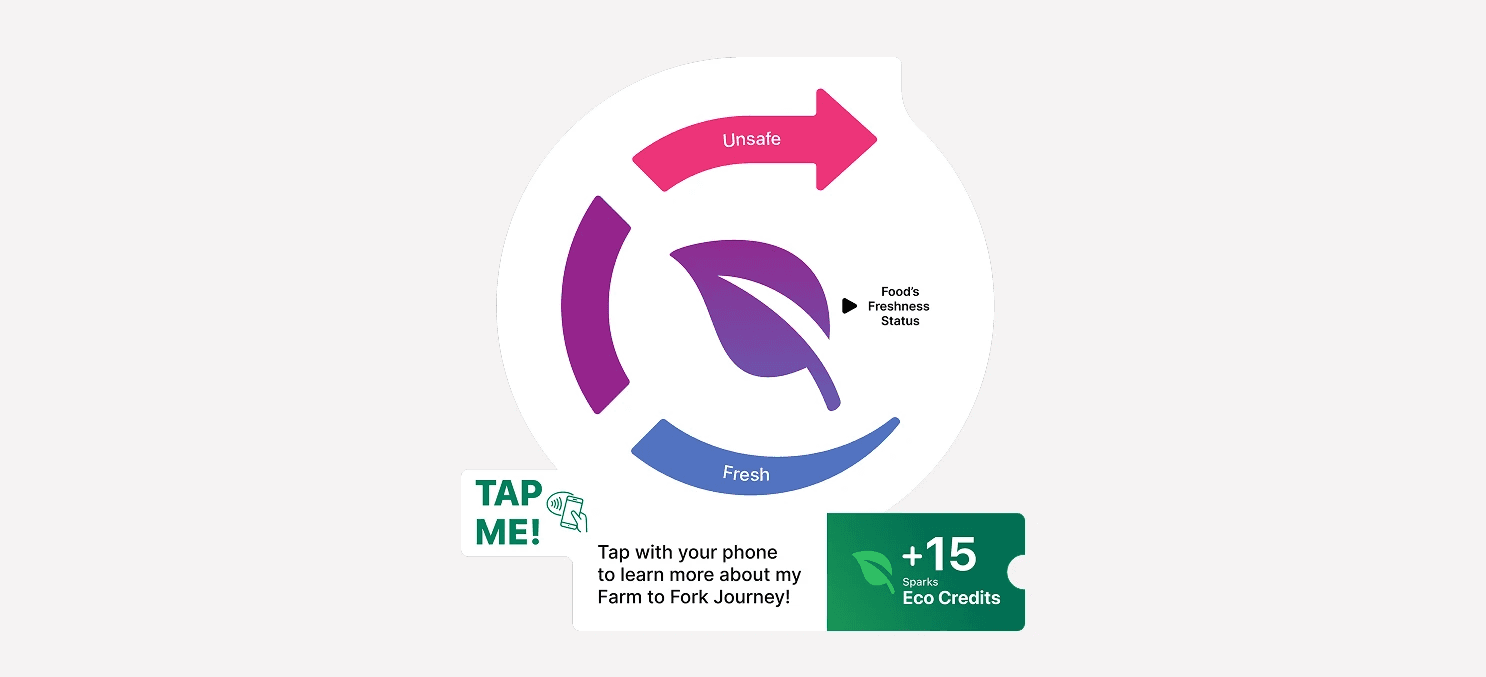
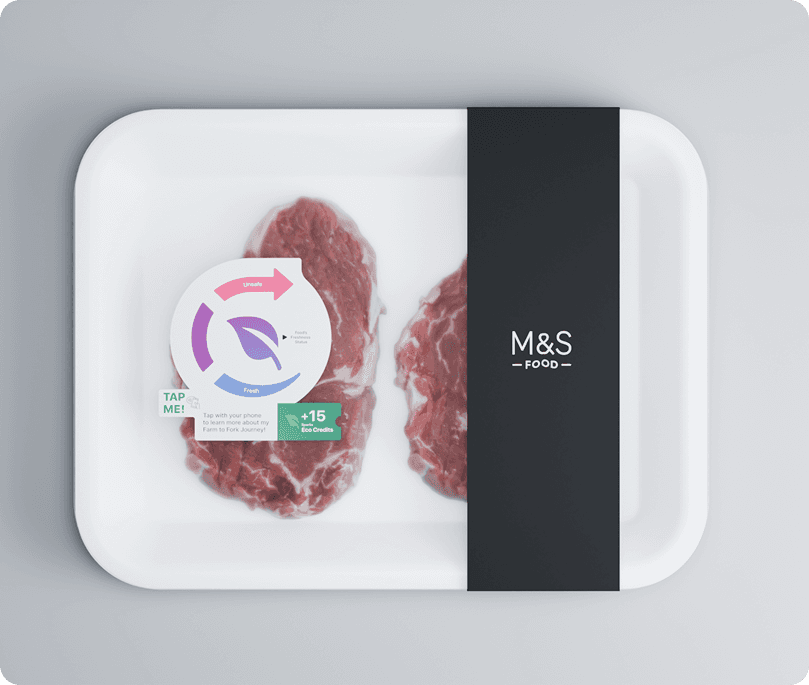
NFC LABEL
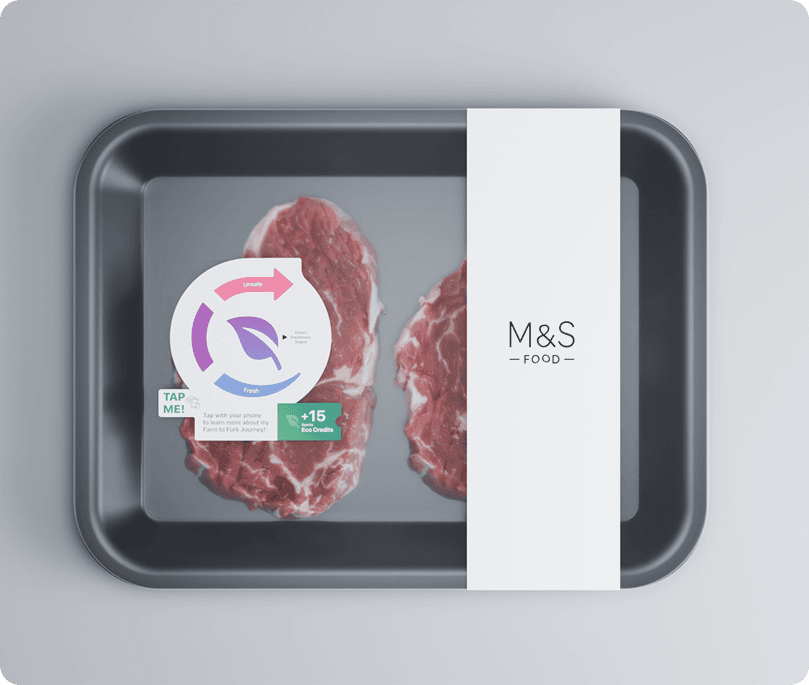
To reduce uncertainty around shelf-life, we explored how freshness could be communicated more intuitively than a static printed date. Our early sketches focused on making time visible, not just numeric.
We experimented with circular progress indicators, colour-change windows and simple visual “checkpoints” to signal freshness stages: fresh, approaching expiry and unsafe. The goal was to create a system that could be understood in seconds.
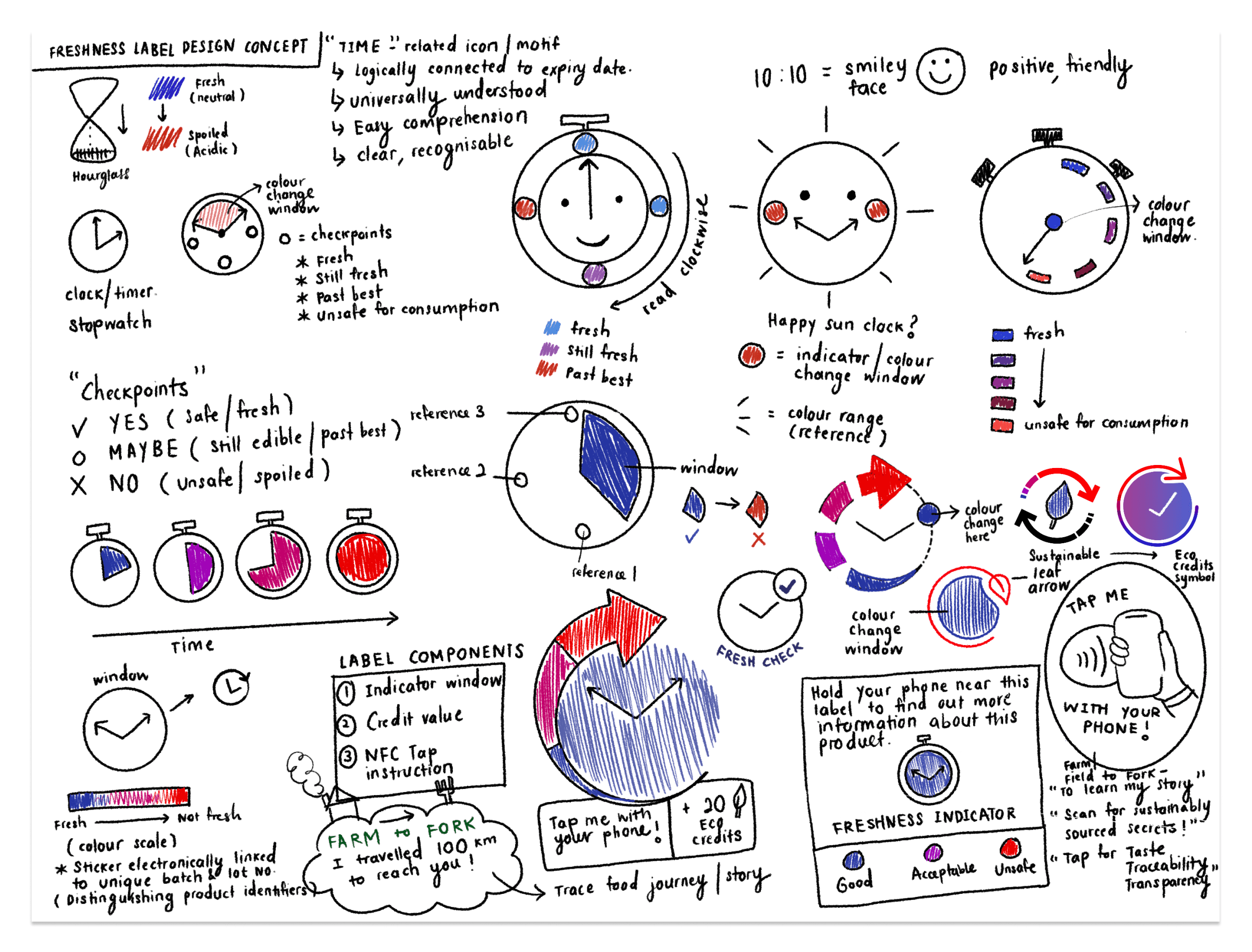
Through iteration, we refined the concept into a recognisable visual dial paired with clear status states. This balanced clarity, manufacturability and ease of integration with existing packaging systems.
LOW-FIDELITY SKETCHES
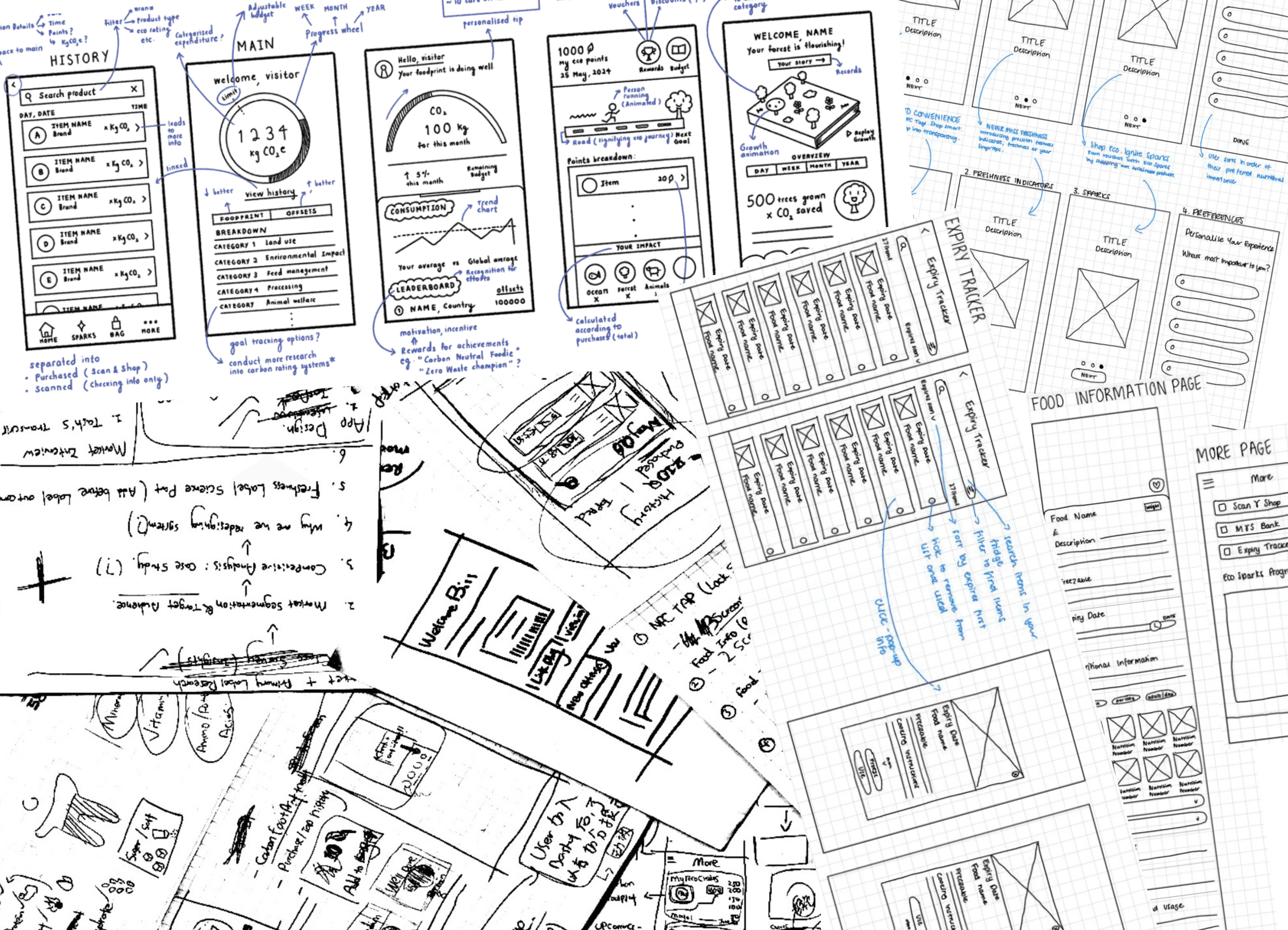
We created low-fidelity wireframes to map the experience before moving into high-fidelity design. This stage helped us work through the end-to-end journey, test different layouts and agree on what information needed to be prioritised. We used them to explore navigation, clarify key pages like the Food Information view and Expiry Tracker and make sure the flow felt straightforward in a real shopping context.
SCAN-TO-ACTION
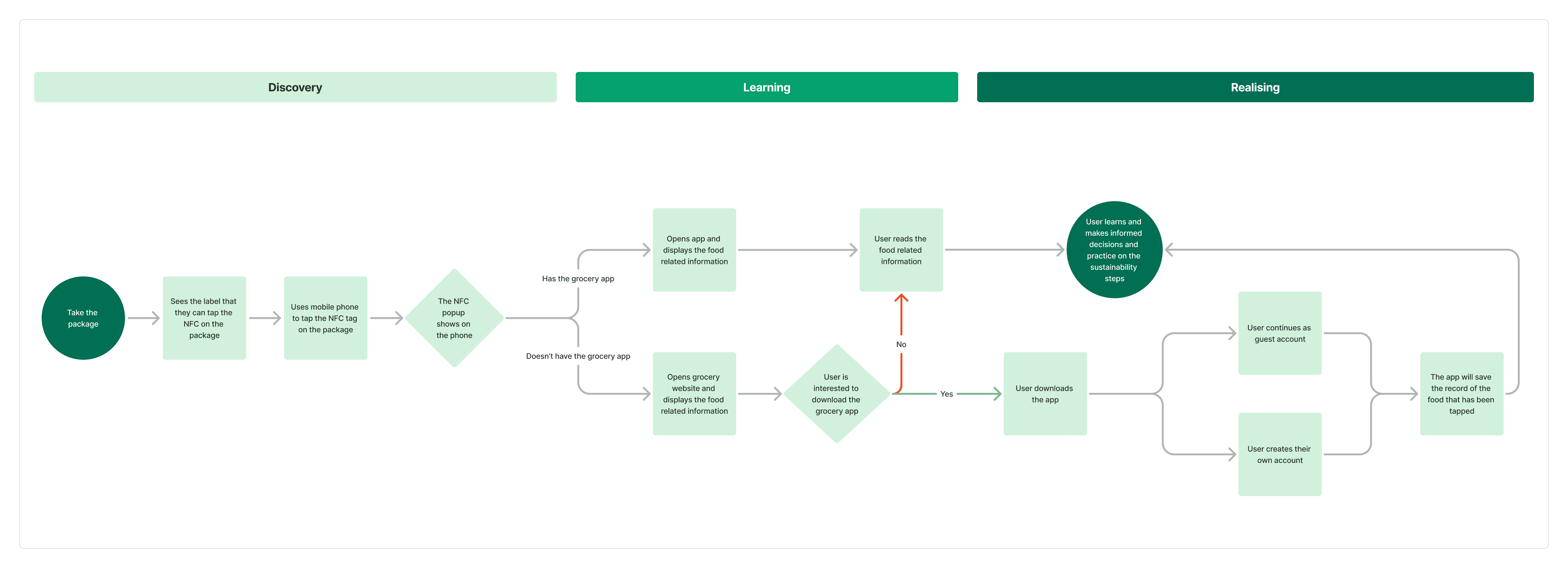
We created a user flow to translate research into a buildable experience. It maps how users move from physical packaging to digital product information, with clear decision points and a web fallback to support accessibility across different user preferences.
05 PROTOTYPE
Bringing ideas to life
PROTOTYPE
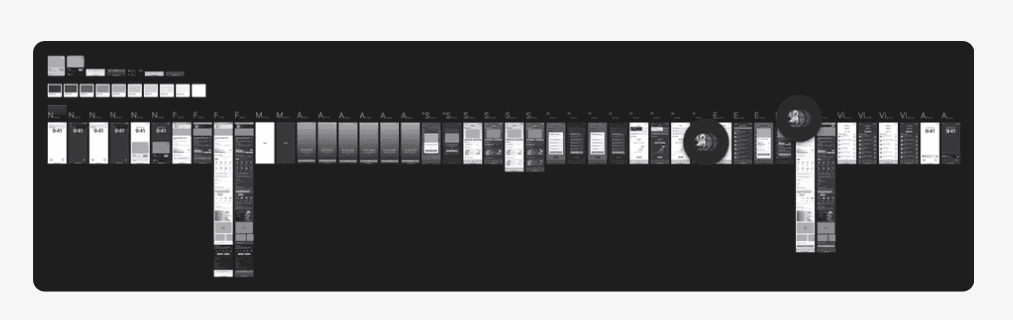
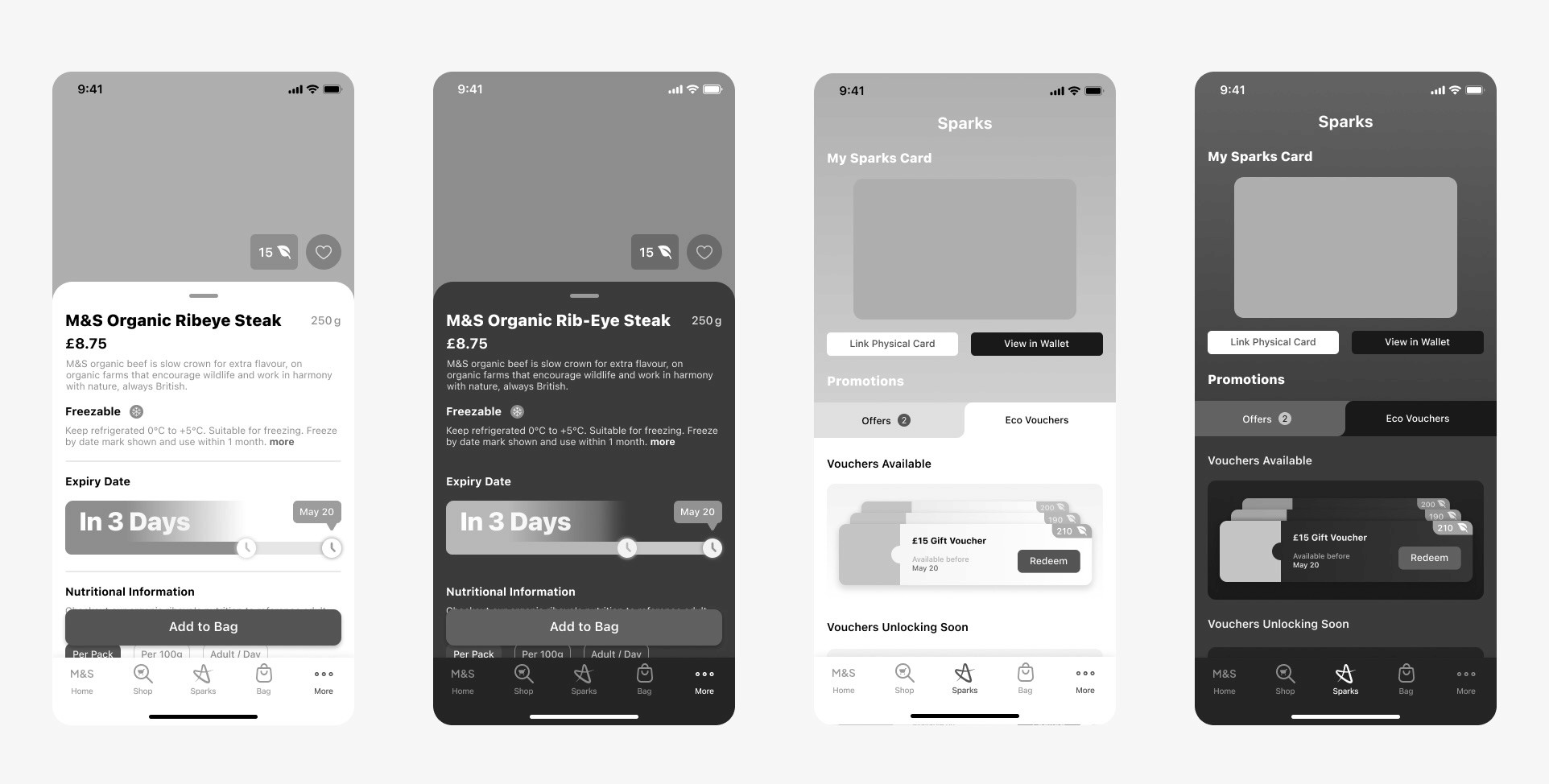
Once the structure was locked, we moved into high-fidelity design and iterated across key screens. Designing light and dark modes helped validate hierarchy, contrast and readability for quick in-store scanning.
KEY FEATURES
DESIGNING THE ENTRY POINT
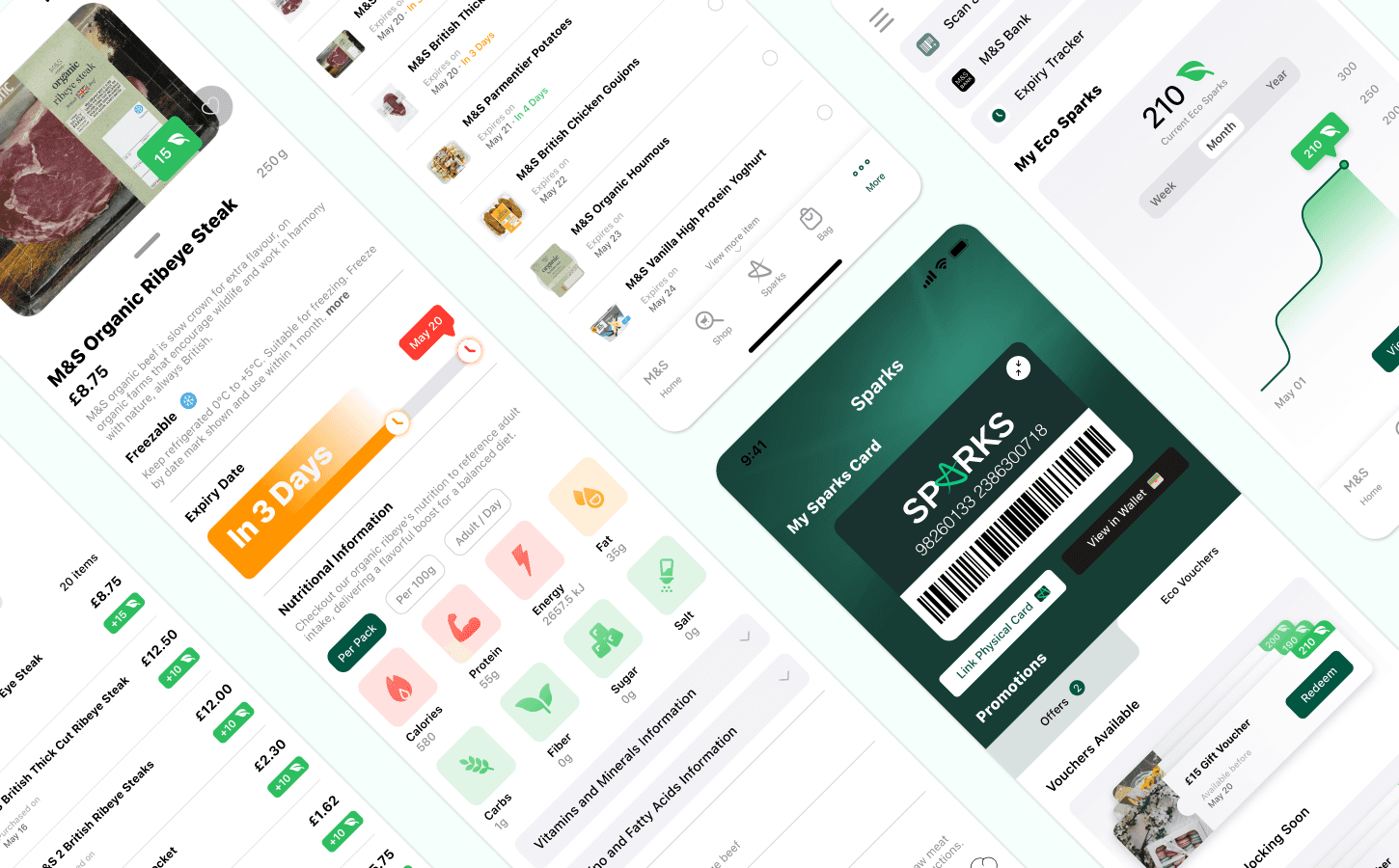
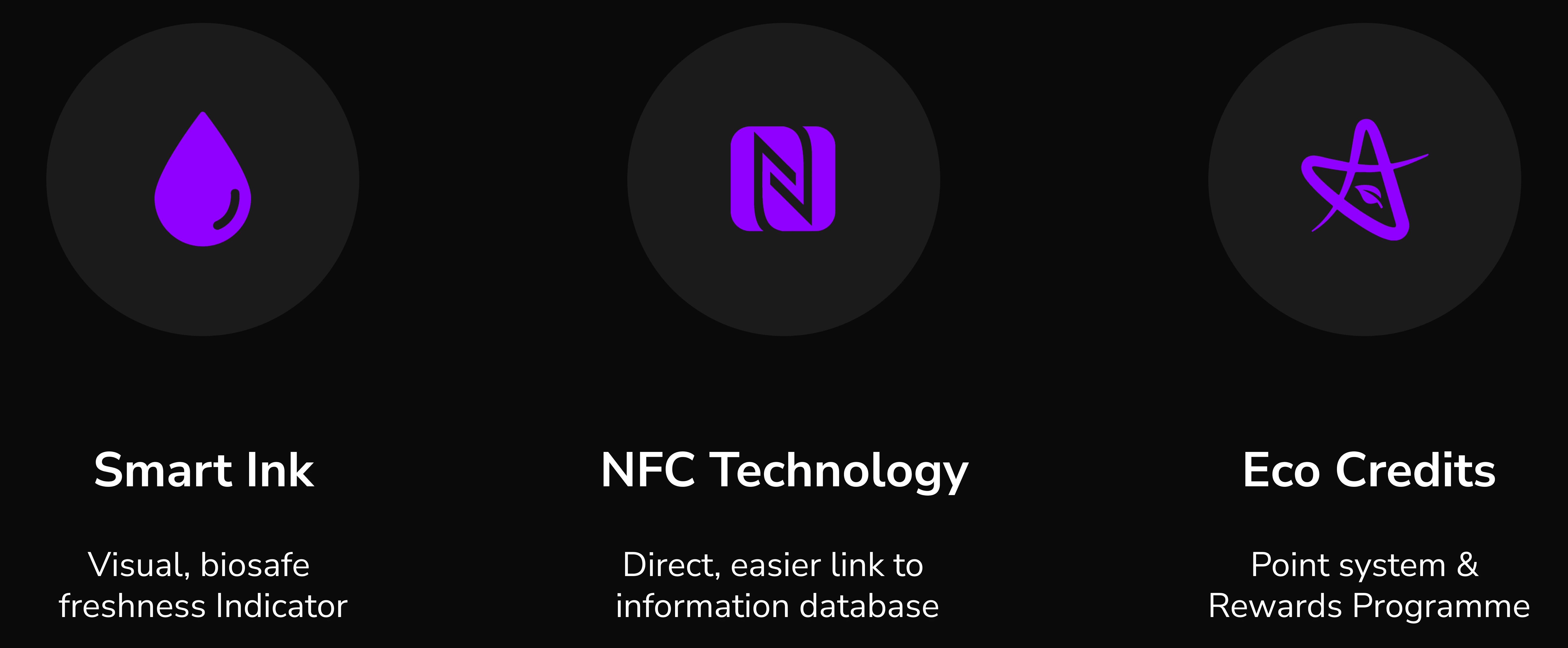
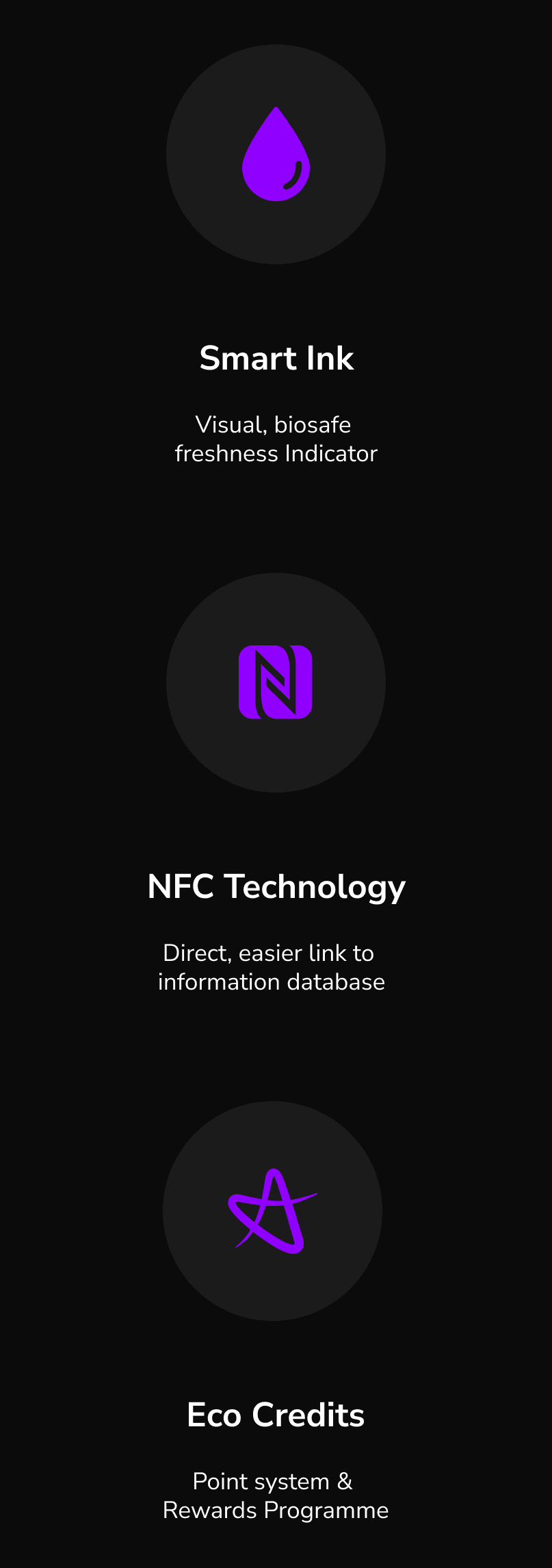
The system is designed as an ecosystem - not just an app. The NFC-enabled freshness label transforms packaging into the gateway for digital transparency, impact tracking and expiry management.

FROM PRODUCT TO PLATFORM
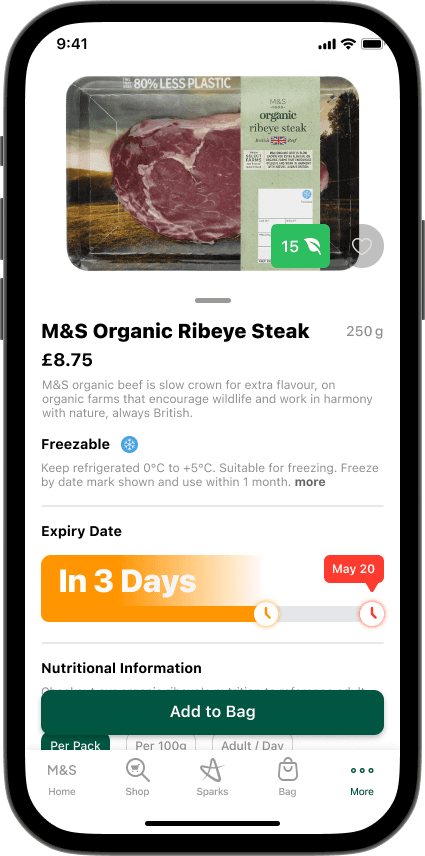
On-demand transparency at shelf level
A unified product page unlocked via NFC that surfaces freshness, sourcing, nutrition and eco impact in one structured interface.
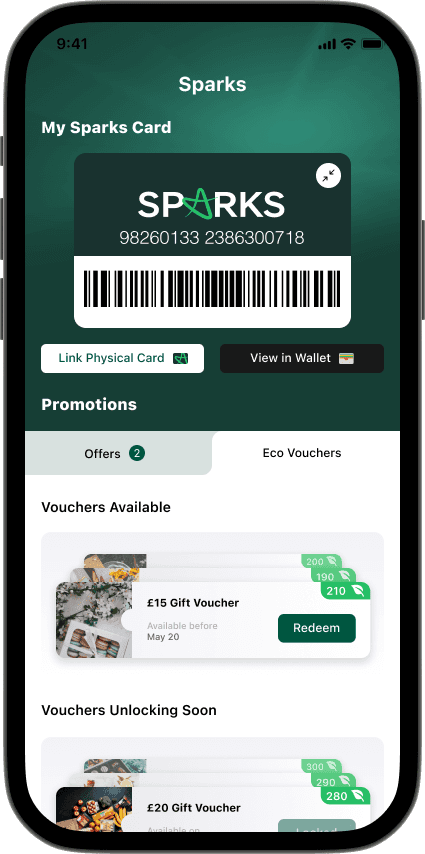
Digital Sparks Wallet
A fully integrated digital loyalty card with eco vouchers and promotions in one place. Eco credits, personalised offers and digital access make sustainable choices visible, rewarding and easy to redeem
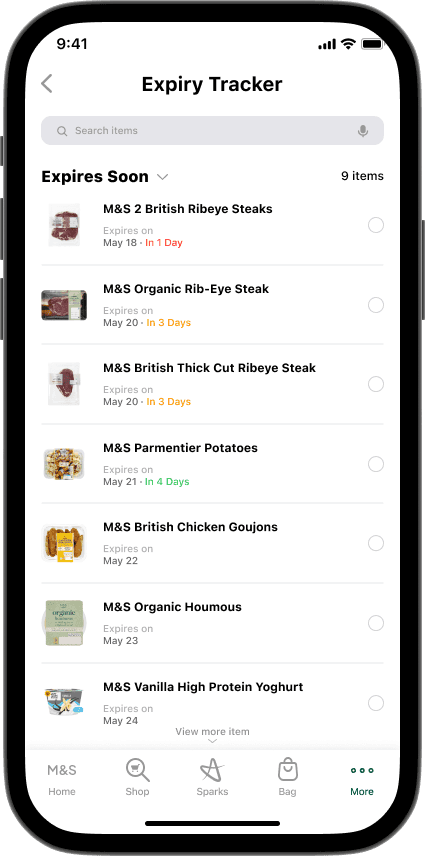
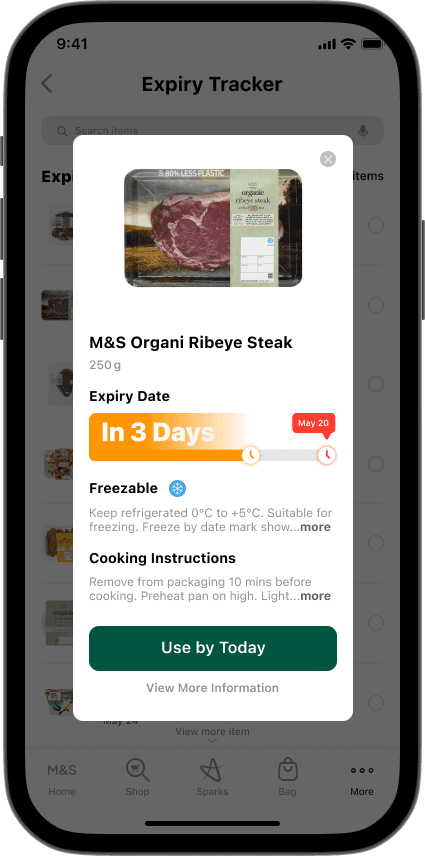
Expiry Overview
A prioritised list of soon-to-expire items, organised by urgency. This gives users a clear overview of what needs attention, supporting better meal planning and reducing forgotten waste.
From static dates to actionable freshness
Expiry information is transformed into a live countdown with urgency indicators and freezer guidance. Items are organised by priority, helping users consume food in time.
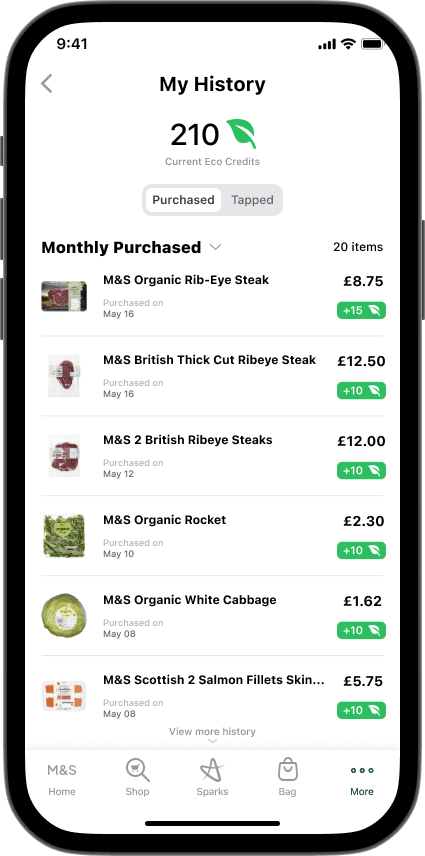
Trace behaviour to reward
Every purchase displays earned eco credits, creating a transparent link between action and outcome. Users can review past transactions and track reward growth.
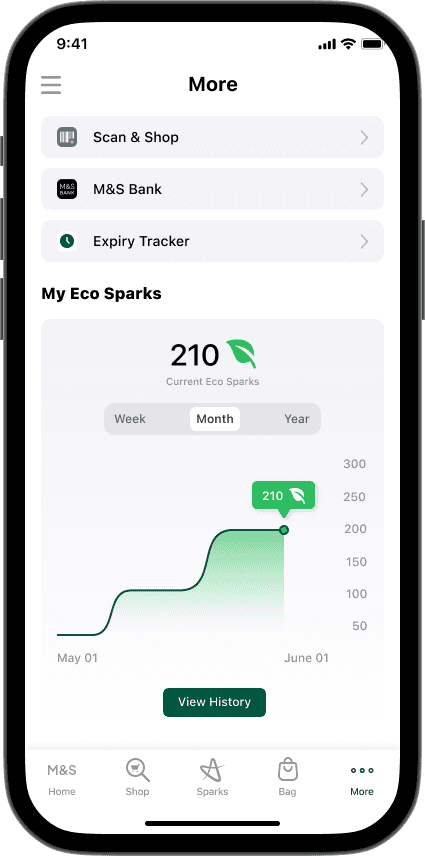
Make sustainability visible
A dedicated dashboard visualises accumulated eco credits across weekly and monthly views. Progress tracking reinforces sustainable habits and builds a tangible connection between purchases and impact.
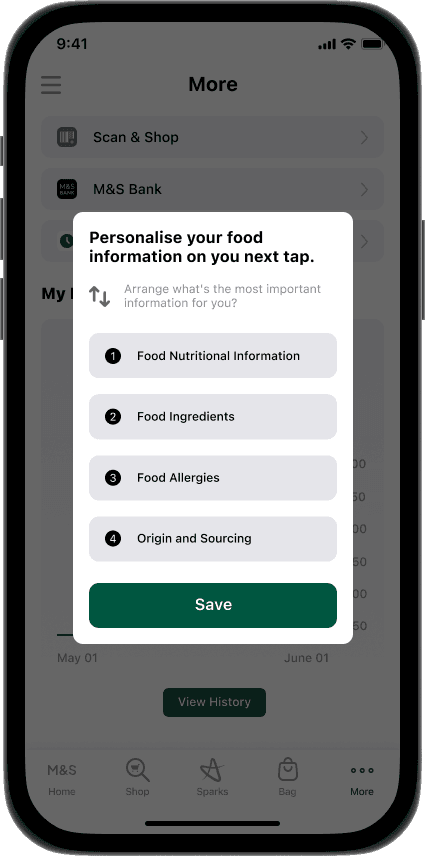
Designed for different needs
Users can customise what appears first -allergens, sourcing, nutrition or impact. The product page dynamically adapts to these preferences.
06 REFLECTION
Rethinking sustainability in practice
REFLECTION
What I Learned
01
Sustainability fails when effort is too high
I learned that intention alone doesn’t drive behaviour. Shoppers may care about sustainability, but if information is hidden, fragmented or time-consuming to access, it simply won’t influence decisions.
02
Trust is a UX problem, not just a sustainability one
Shoppers don’t just want more sustainability claims, they want signals they can trust. Insights from industry interviews highlighted how packaging damage, unclear date cues and inconsistent information can undermine confidence. That shaped the concept to combine clearer freshness communication with transparent product information in a single, consistent experience.
03
Incentives need to feel tangible to influence behaviour
Rewards only work when the value is obvious and connected to action. If sustainability benefits feel abstract, they get ignored. That’s why the eco credits concept was designed to make impact visible at the point of purchase and easy to review later through history, so progress feels real, not hidden.
Next Steps
01
Validate the concept with shoppers in-context
Run quick, realistic “on-the-shelf” feedback sessions to test whether the NFC tap, freshness label and prioritised information actually feels faster and clearer than current packaging. The goal would be to learn what people notice first, what they ignore and whether the value lands without explanation.
02
Define the system rules behind the experience
If this moved forward, the next step would be translating the concept into real constraints: how eco credits are calculated, what freshness indicator states mean and how product data stays accurate across suppliers. This would turn the UI into a scalable system rather than a one-off prototype.