Designing with empathy to create experiences that truly support people
Cambridge University Press & Assessment
Internship
ROLE
Associate Experience Designer
YEAR
Jun-Aug 2024
01 OVERVIEW
Understanding my experience
MY EXPERIENCE
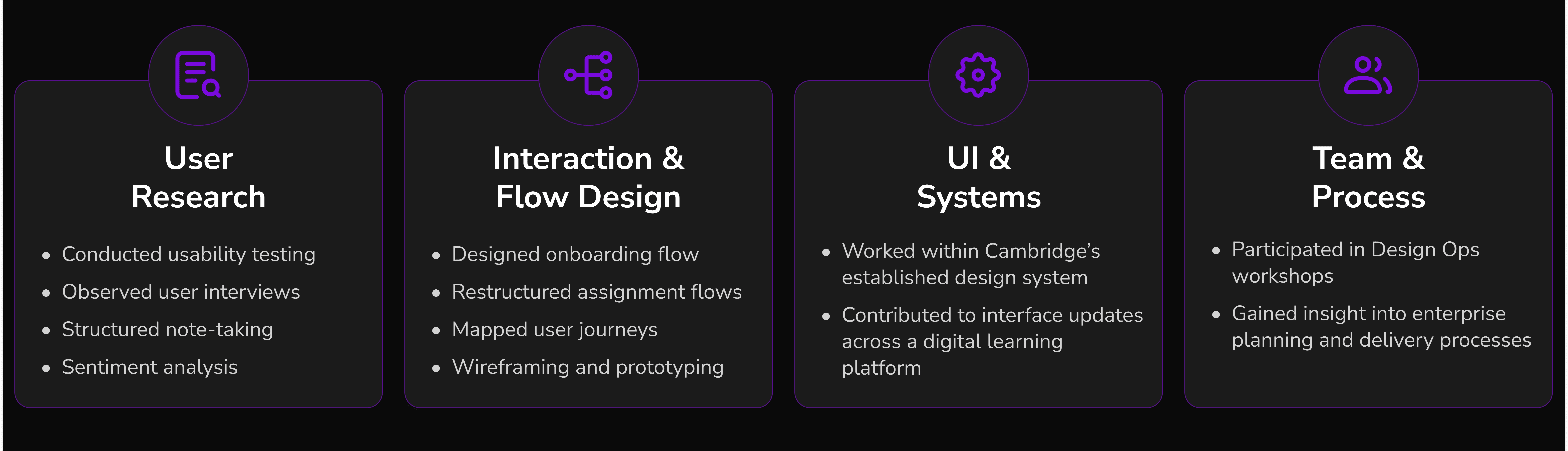
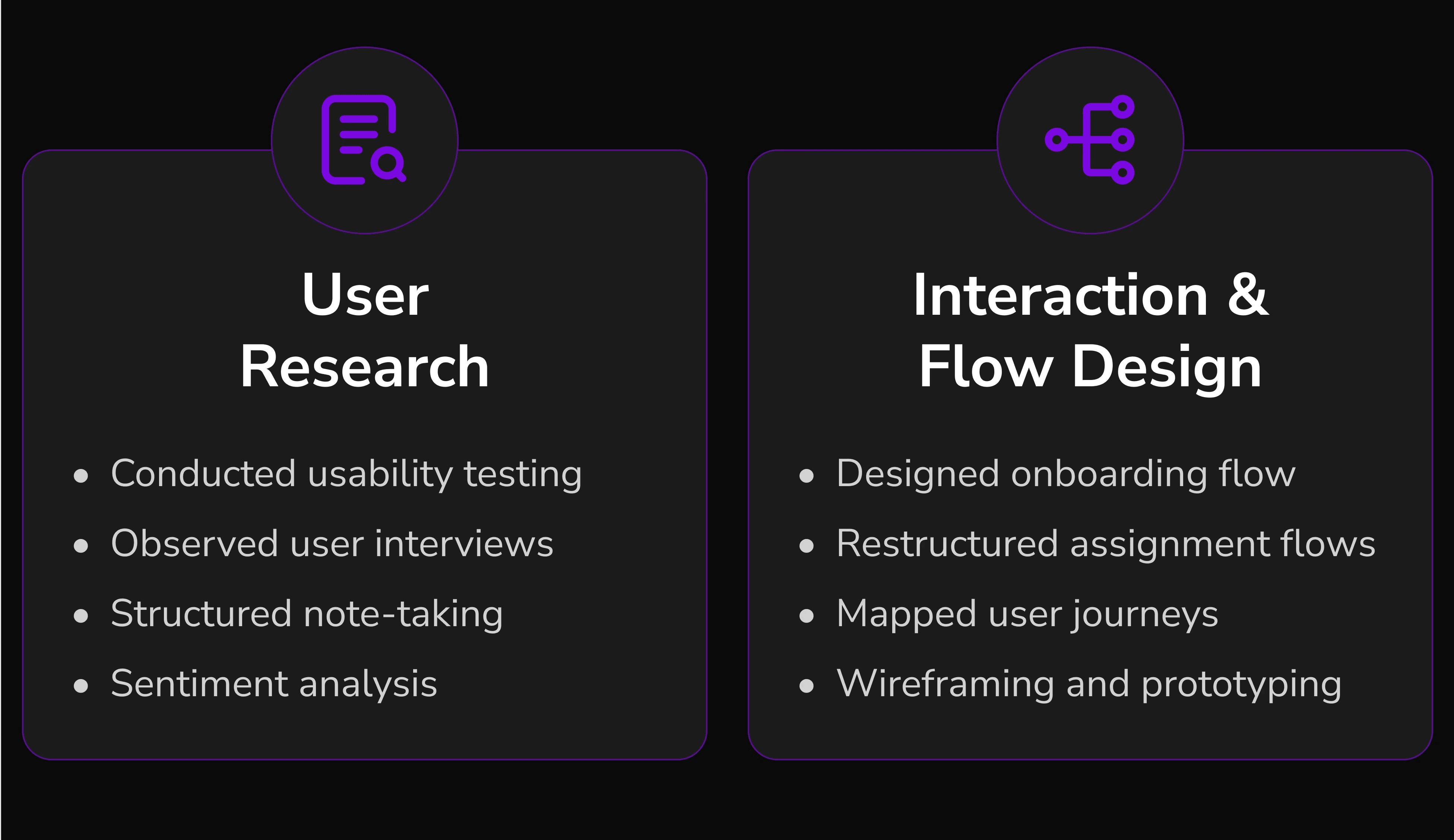
As an Associate Experience Design Intern, I gained hands-on experience in UX/UI design by supporting the creation of engaging digital experiences across CUPA’s web and mobile platforms. During my internship within the English UX team, I contributed across multiple live initiatives spanning interaction design, usability research and strategic experience visualisation.
My work focused on improving the teacher experience within Mosaic and Cambridge One - from refining assignment flows and reporting journeys to designing onboarding guidance and visualising future-state customer journeys.
ABOUT THE PRODUCTS
Cambridge One is the umbrella digital learning environment where teachers assign activities and students complete learning exercises. It hosts curriculum-aligned content and performance tools.
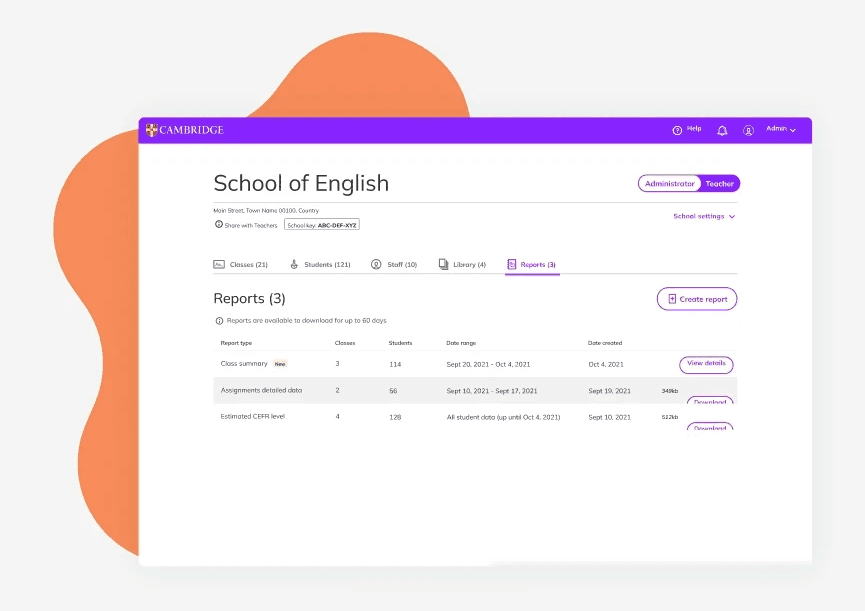
Mosaic sits inside Cambridge One as the insights dashboard for educators focusing on detailed student progress, review tools and performance visualisation.
SCOPE OF CONTRIBUTION
Cambridge One is the umbrella digital learning environment where teachers assign activities and students complete learning exercises. It hosts curriculum-aligned content and performance tools.
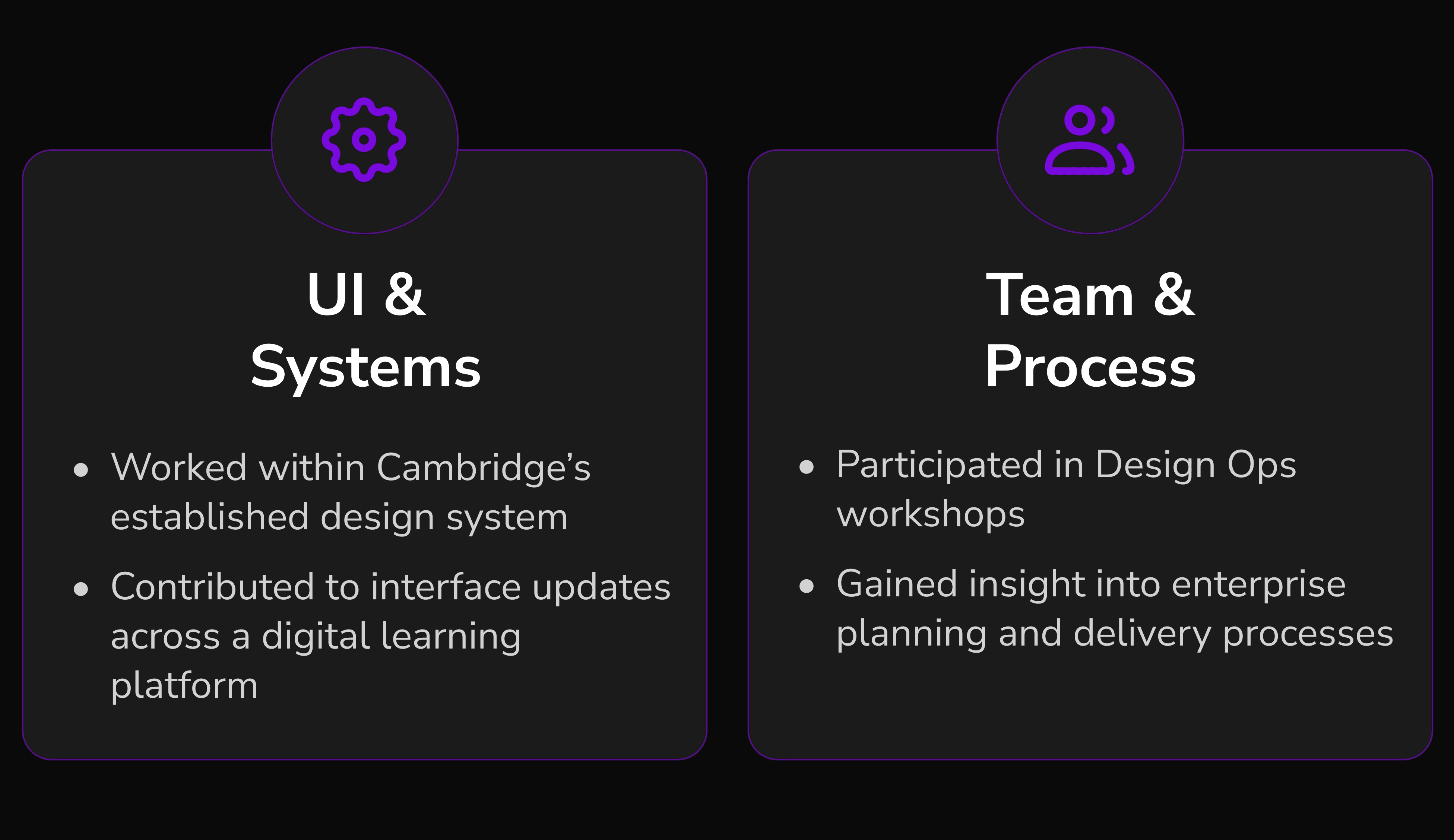
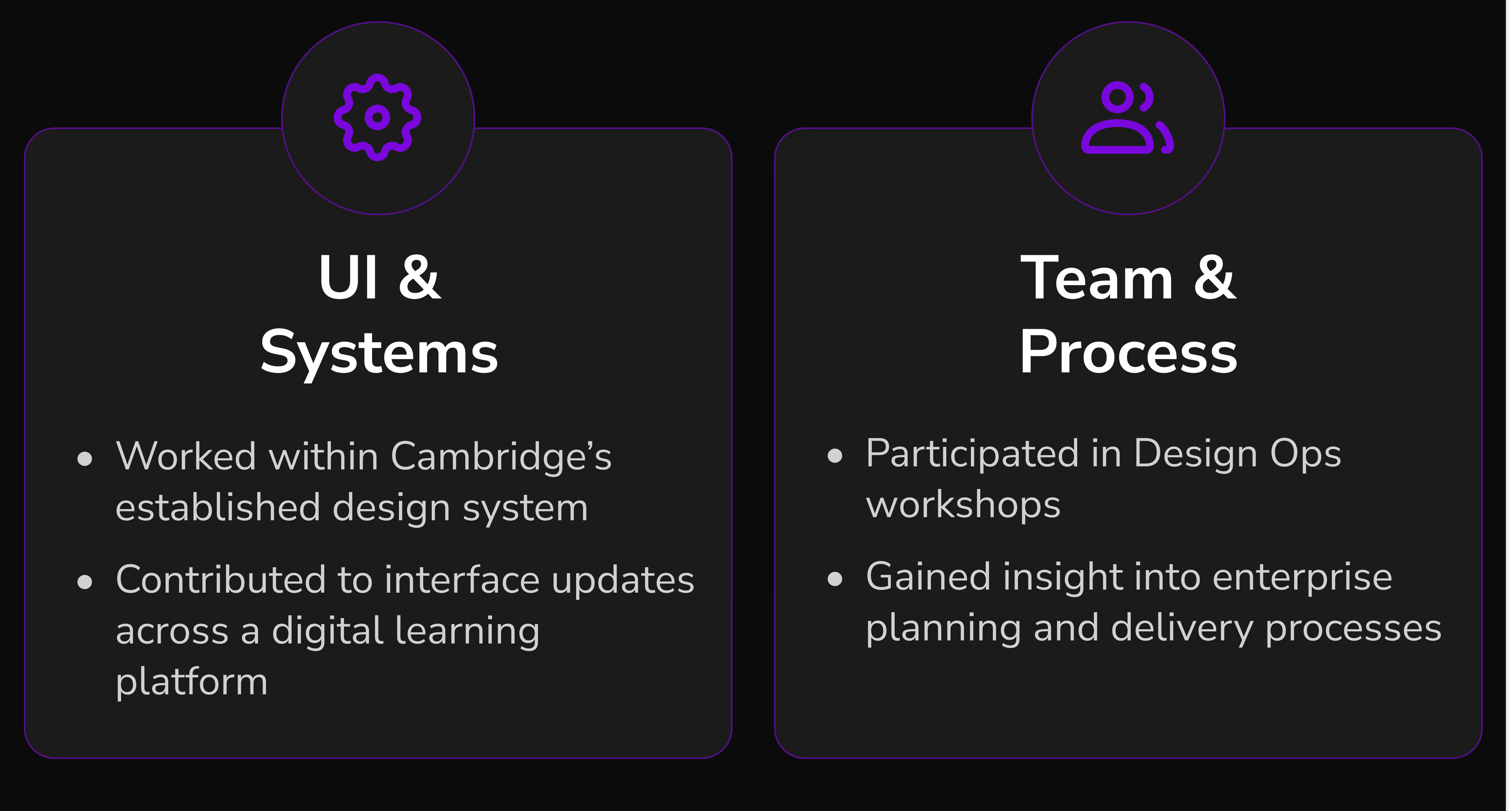
To respect confidentiality, certain aspects of the projects cannot be publicly shared. The work presented reflects my approach, thinking and contributions, which I’m happy to expand on if needed.
Optimising teacher decision-making
CONTEXT
The assignment update and reporting journey needed to align with updates introduced in Cambridge One, while also improving how teachers navigated Mosaic. The goal was to make the experience clearer, more consistent and easier to interpret.
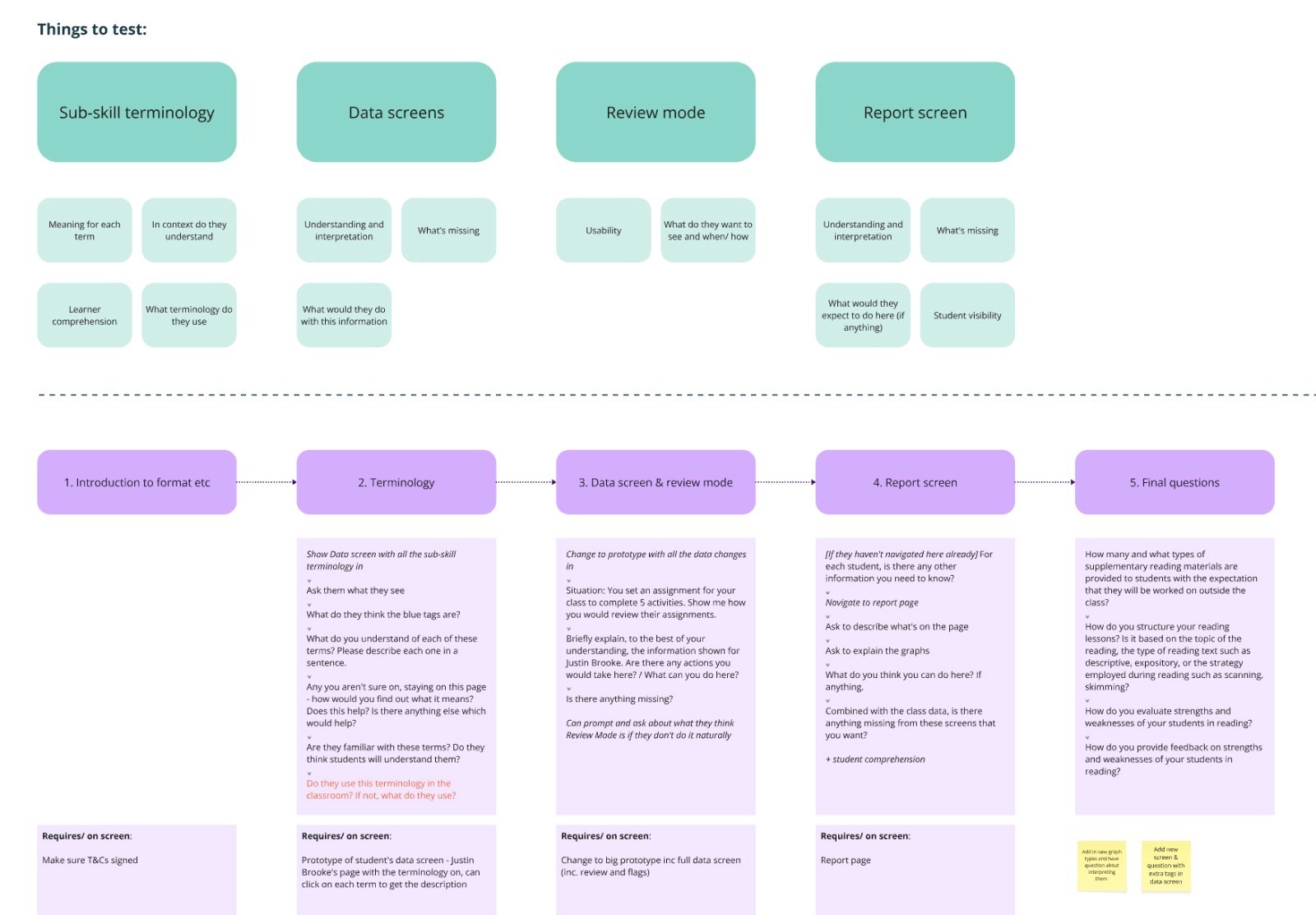
Problem: Teachers needed to quickly understand student performance, identify intervention opportunities and navigate assignment setup without friction. However, inconsistencies between products and unclear performance indicators made interpretation more difficult than necessary.
Designing guided onboarding
DESIGNING GUIDED ONBOARDING
Brief: We want a walkthrough for the C1 theme of the test player.
Designing the future journey
DESIGNING THE FUTURE JOURNEY
Brief: Produce a Customer Journey visual map for some key personas to showcase how we'd like customers to interact with our key touchpoints in the future.
Objective: Show the various CX touchpoints some of our key customers will experience at various points in their journey.
Worth Knowing: Needs to have a fun yet professional vibe and feel inclusive.
HOW I APPROACHED THE PROJECT
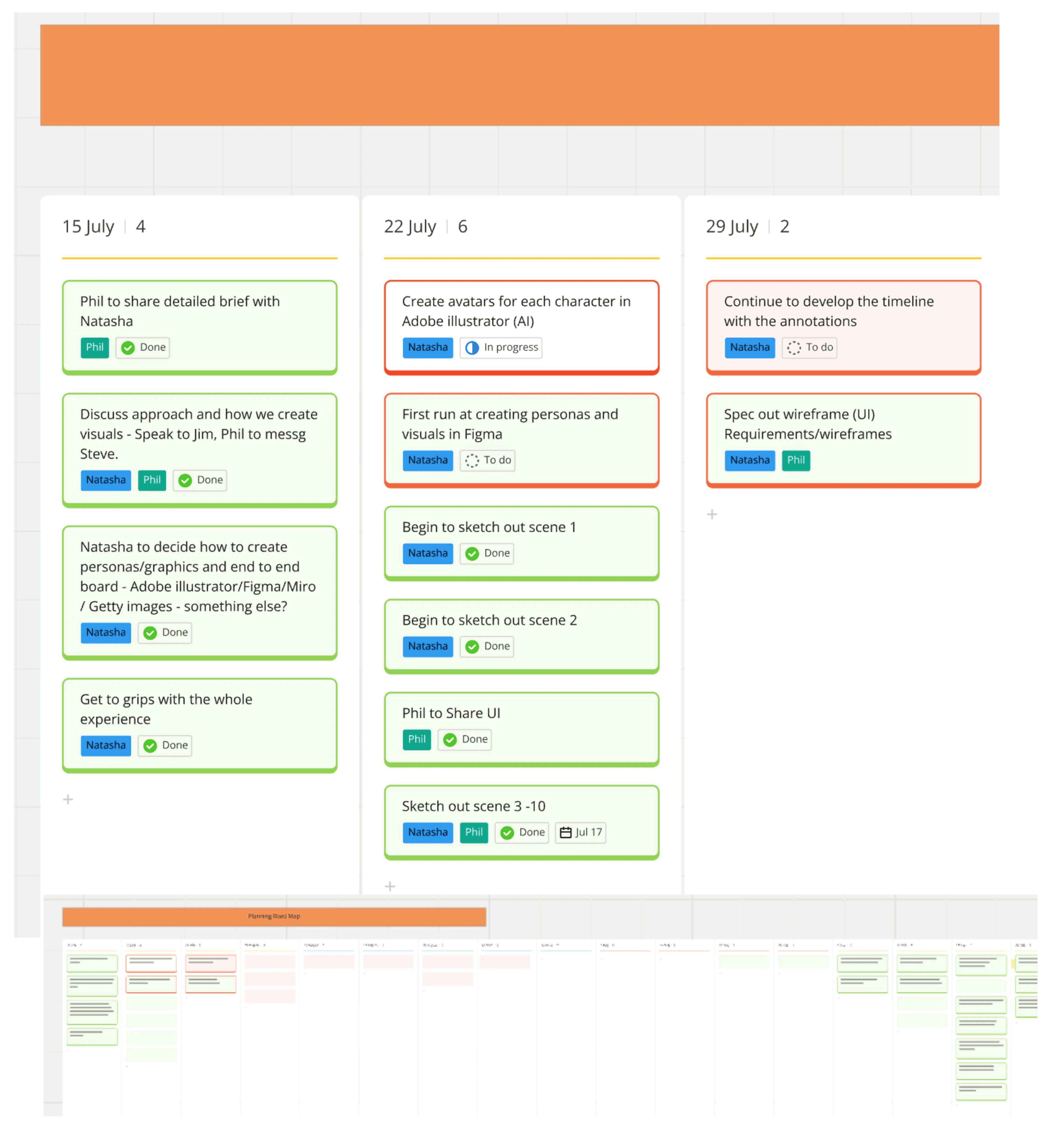
Working with the lead designer we brainstormed an end to end roadmap, breaking down all the tasks we'd need to do in order to complete the project.
We then broke down all the tasks over the weeks of my internship.
Early in the project, we identified the need for consistent, high-quality visuals to bring our personas to life. After consulting with designers and service designers on suitable tools, we initially explored AI-assisted workflows alongside Adobe Illustrator.
However, we found it challenging to maintain consistency across different persona scenarios, particularly as we needed to depict them in a range of contexts (e.g. meetings, conversations and seated or standing positions).
To address this, we secured budget approval from our Operations Manager to commission a specialist art worker. This ensured a cohesive and scalable set of persona illustrations that aligned with our design system and strengthened the overall quality of our UX outputs.
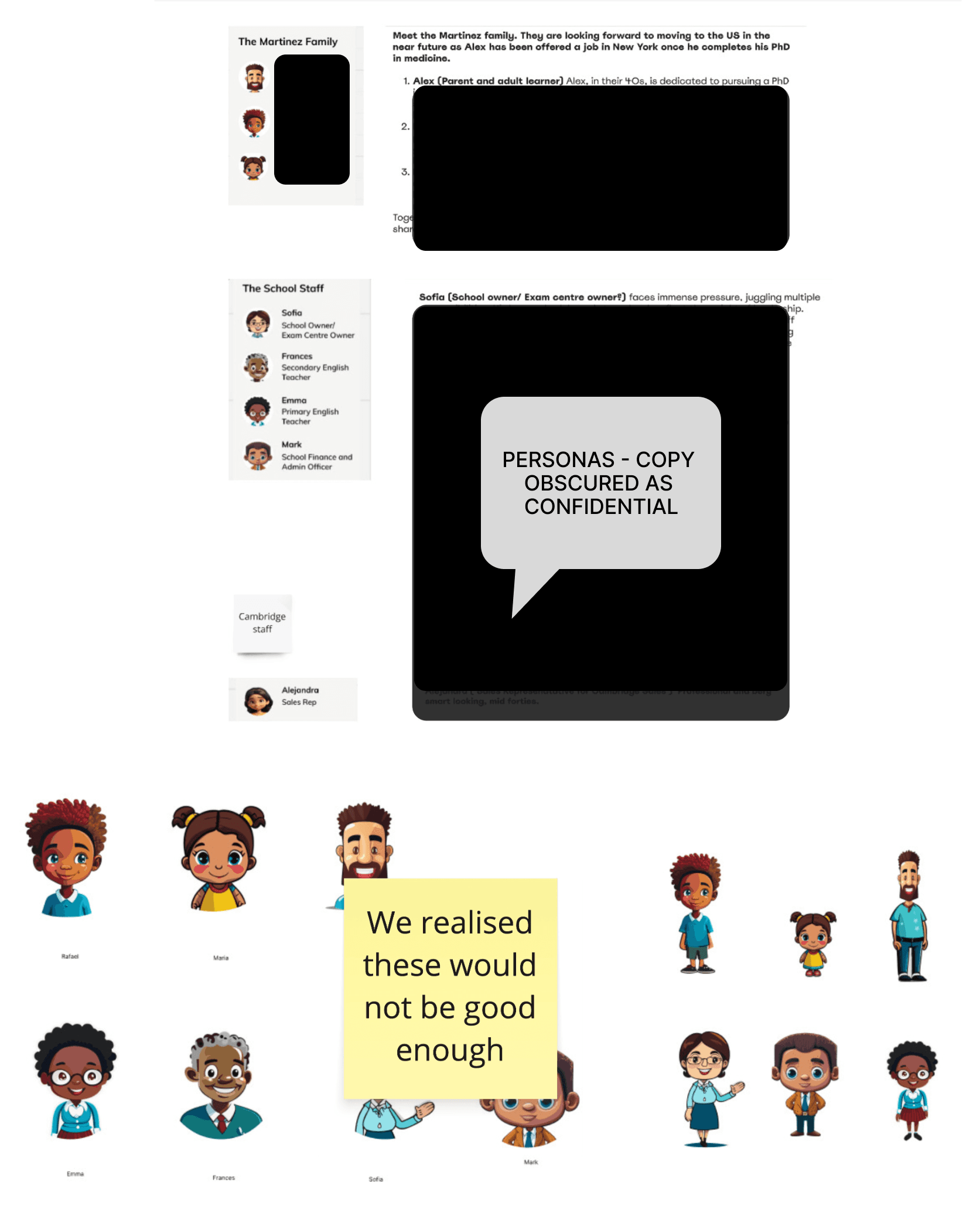
CREATING THE STRUCTURE
We had a service blueprint we could work with and started to summarise what visuals we'd need by creating a storyboard.
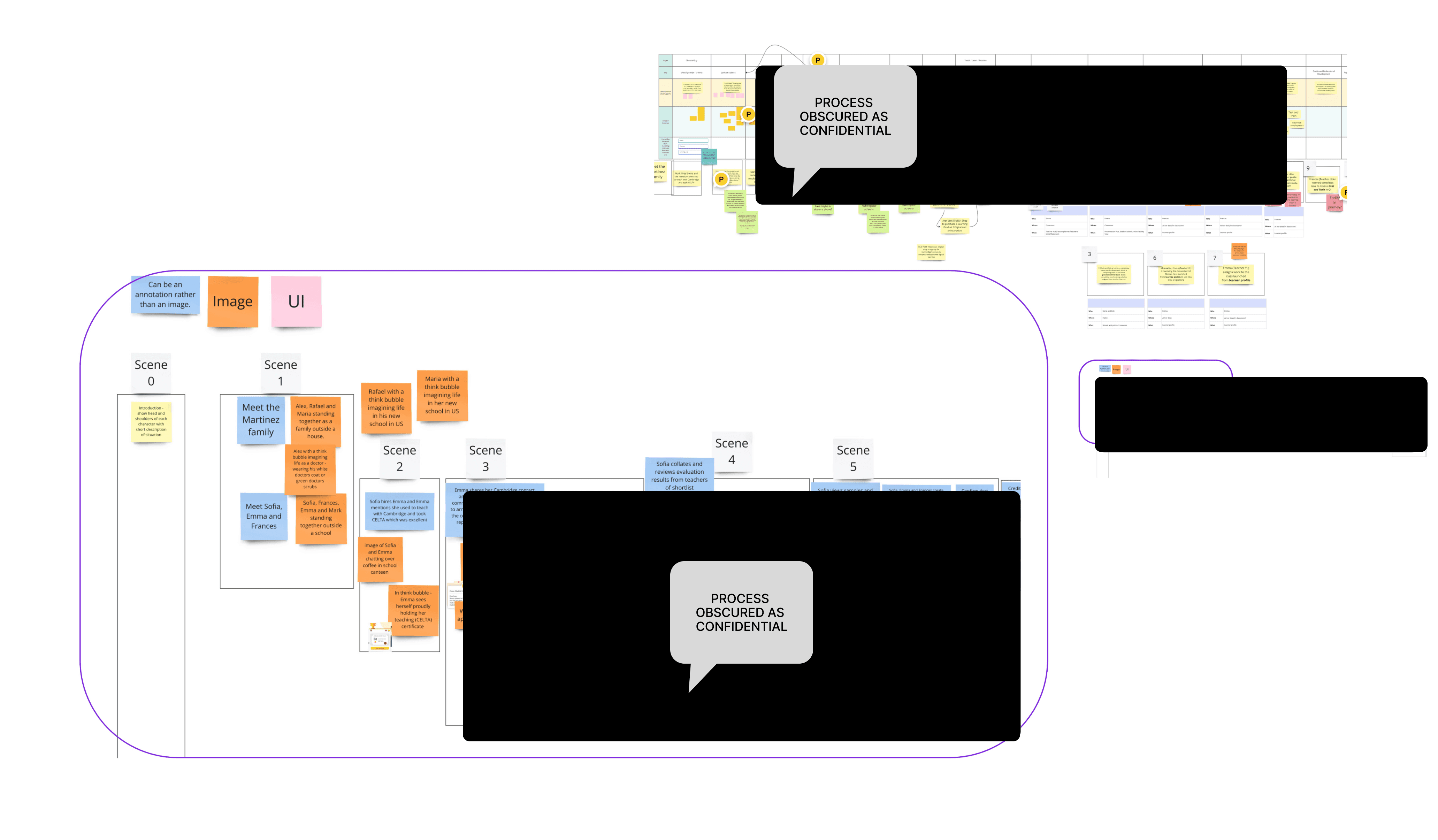
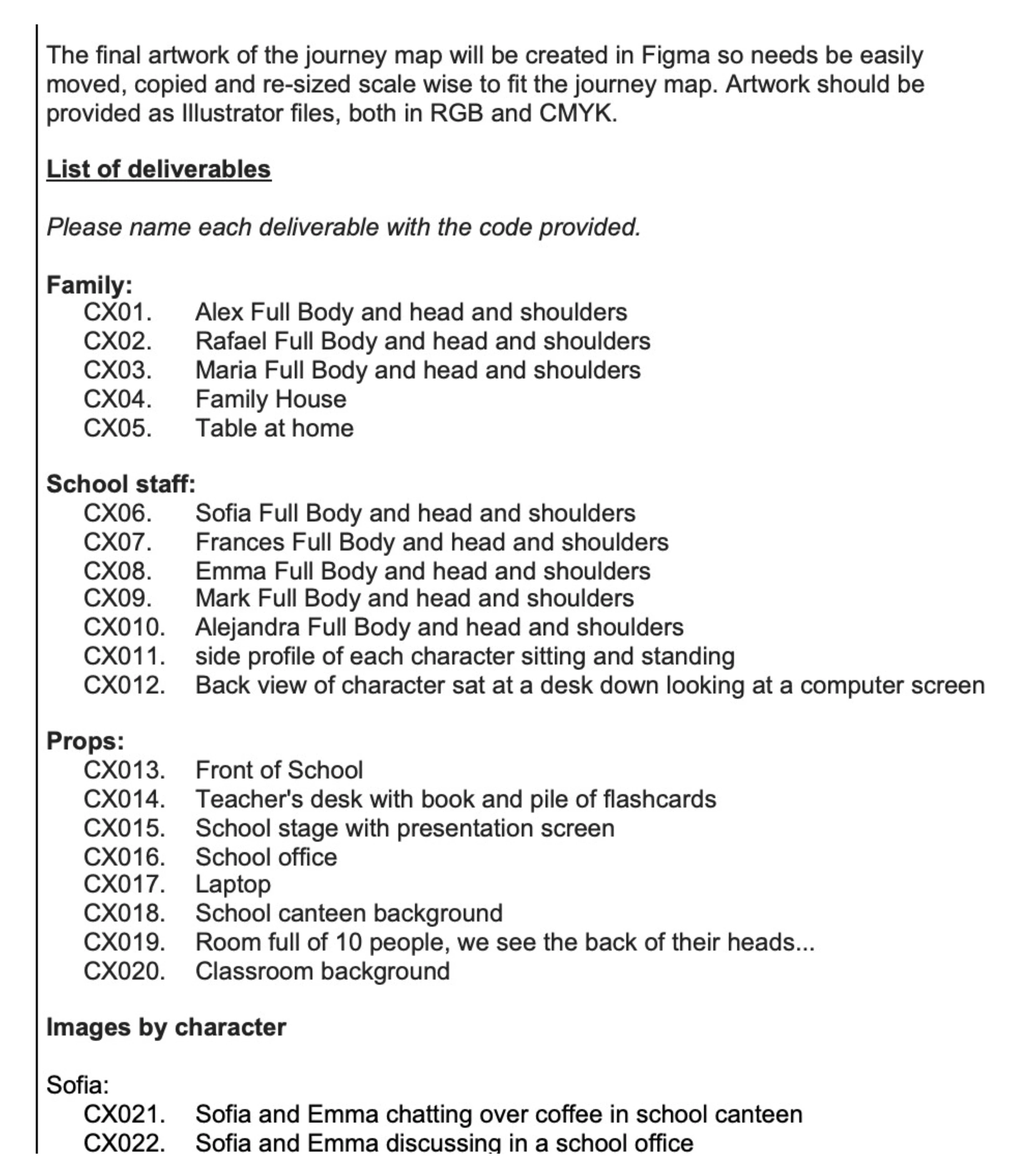
BRIEFING THE ARTWORK
With a clear, scene-by-scene storyboard in place, we were able to effectively brief the art worker, ensuring the visuals aligned with our narrative and design intent.
ADDING UI AND ANNOTATIONS
We used Figma to build out the customer journey, carefully planning the placement of UI components alongside annotations to support clarity and storytelling. Early iterations focused on low-fidelity UI to define layout and hierarchy, adding the style from the Design System later.
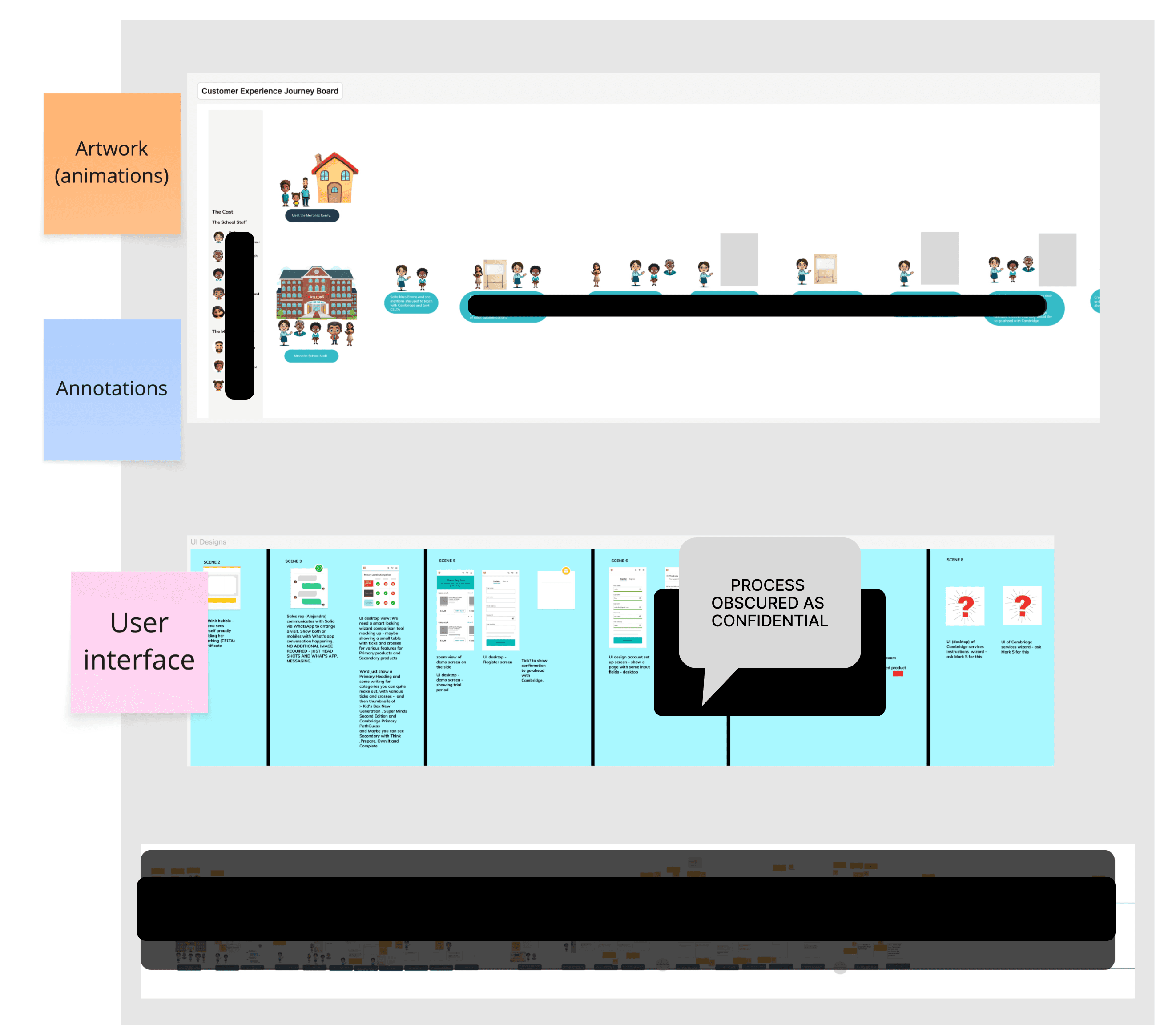
Once the final illustrations were ready, we brought everything together into a single, cohesive journey map - creating a clear and engaging representation of the end-to-end user experience.
05 REFLECTION
Improving through iteration
REFLECTION
What this internship has taught me:
This internship really shifted how I think about design. Before this experience, I focused mostly on interface-level decisions - layout, hierarchy, interaction details. Working within Cambridge’s ecosystem helped me see the bigger picture: how different products, teams and decisions connect within a larger digital environment.
Sitting in on usability sessions and taking structured notes showed me how easily assumptions can creep into design. Watching teachers interpret performance data in real time reinforced how important clarity is, especially in tools that support real classroom decisions. It also made me appreciate how research drives meaningful iteration.
The North Star journey project pushed me to think at a different scale. It wasn’t just about UI, it was about communicating a shared vision clearly enough for multiple teams to align around it.
Overall, this experience helped me move from thinking about individual features to thinking about connected systems and real user contexts. It strengthened my confidence in contributing within structured teams, working within constraints and grounding design decisions in evidence rather than instinct. It also made me more intentional about simplicity, recognising that clarity often matters more than adding more functionality.